

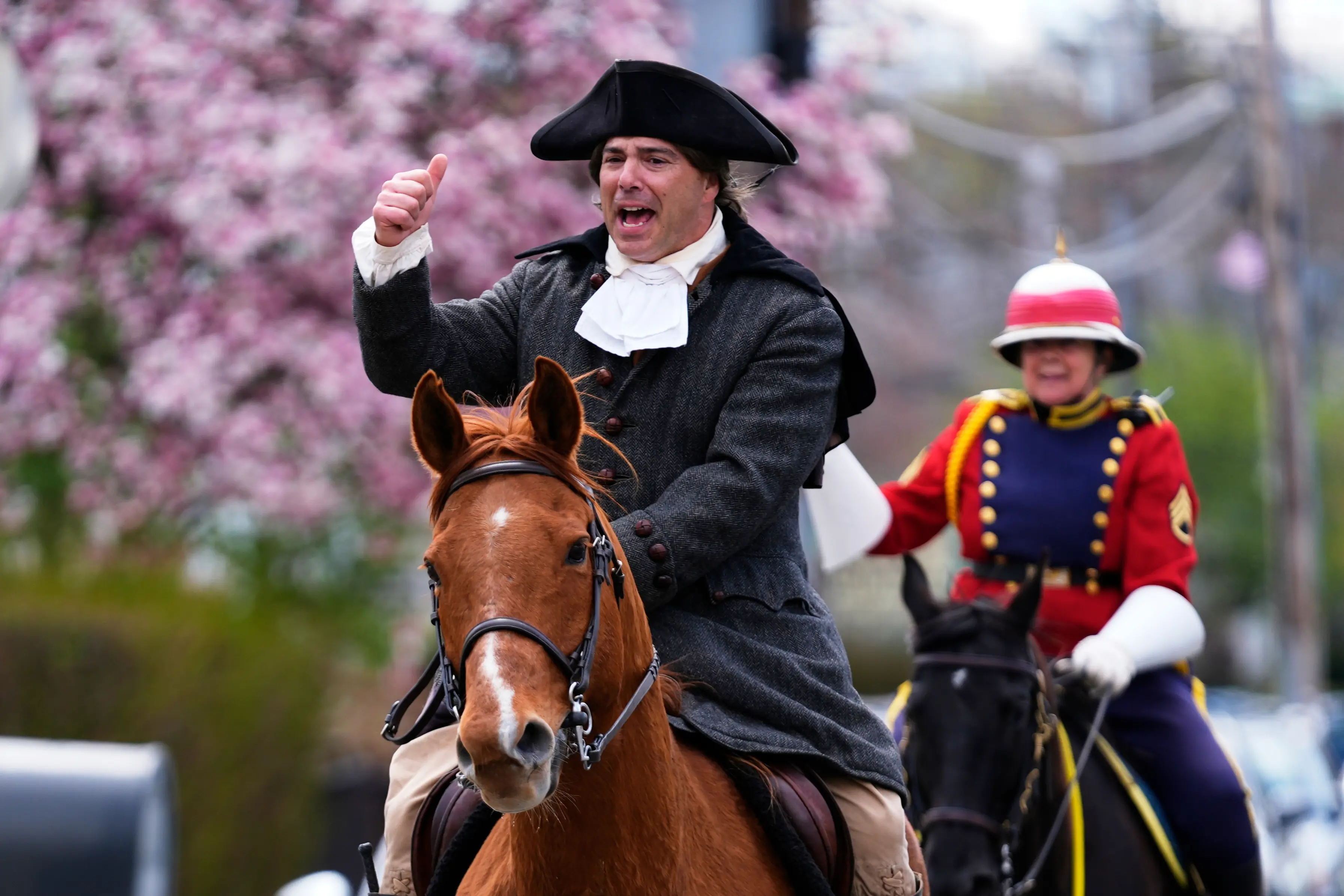
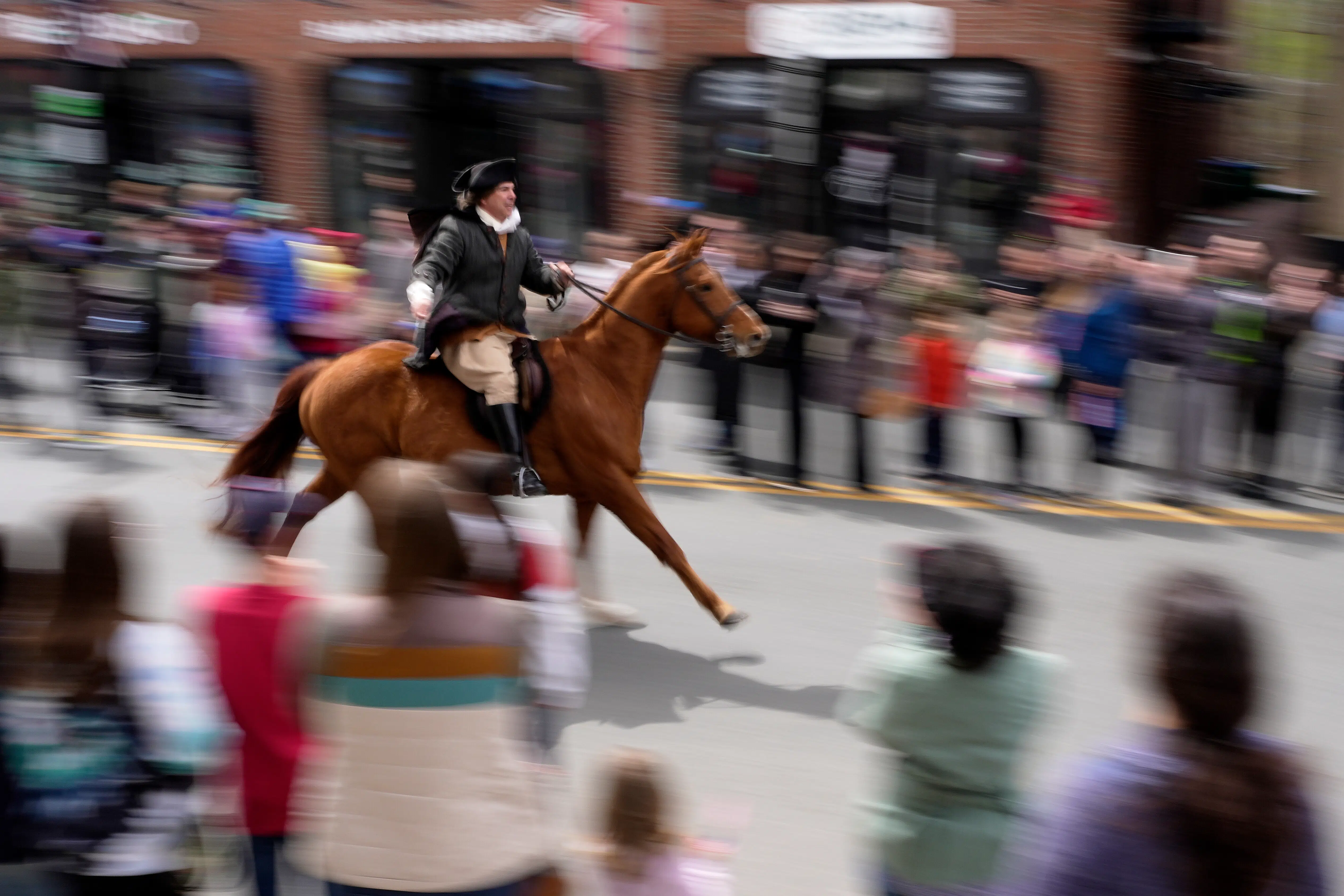
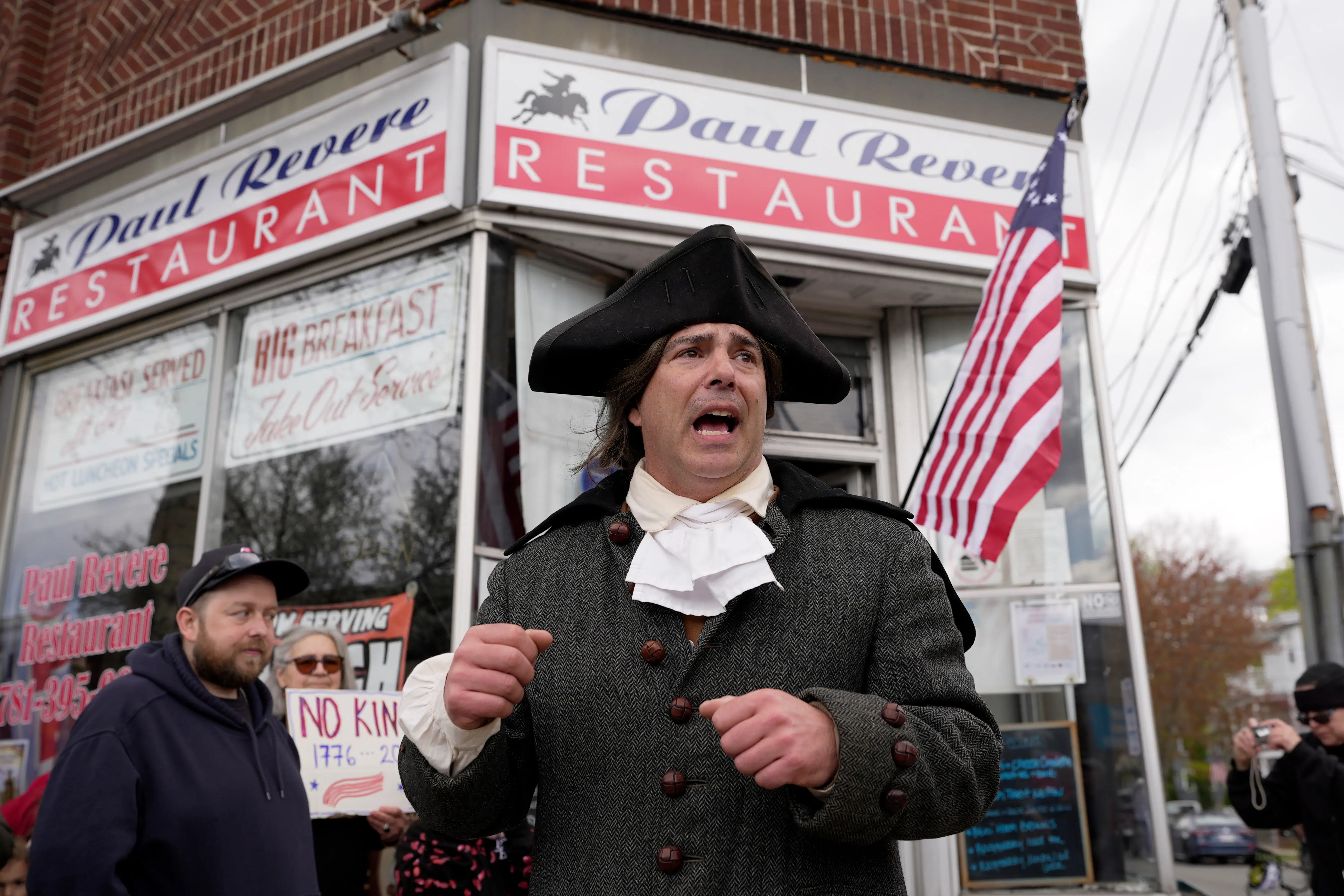
BOSTON – The clip-clop of horse hooves echoed as Paul Revere rode through the streets of Boston’s North End on Monday — a reenactment of his historic midnight ride, but with some modern-day tweaks: This time, the revolutionary hero set out under bright daylight and a police escort.
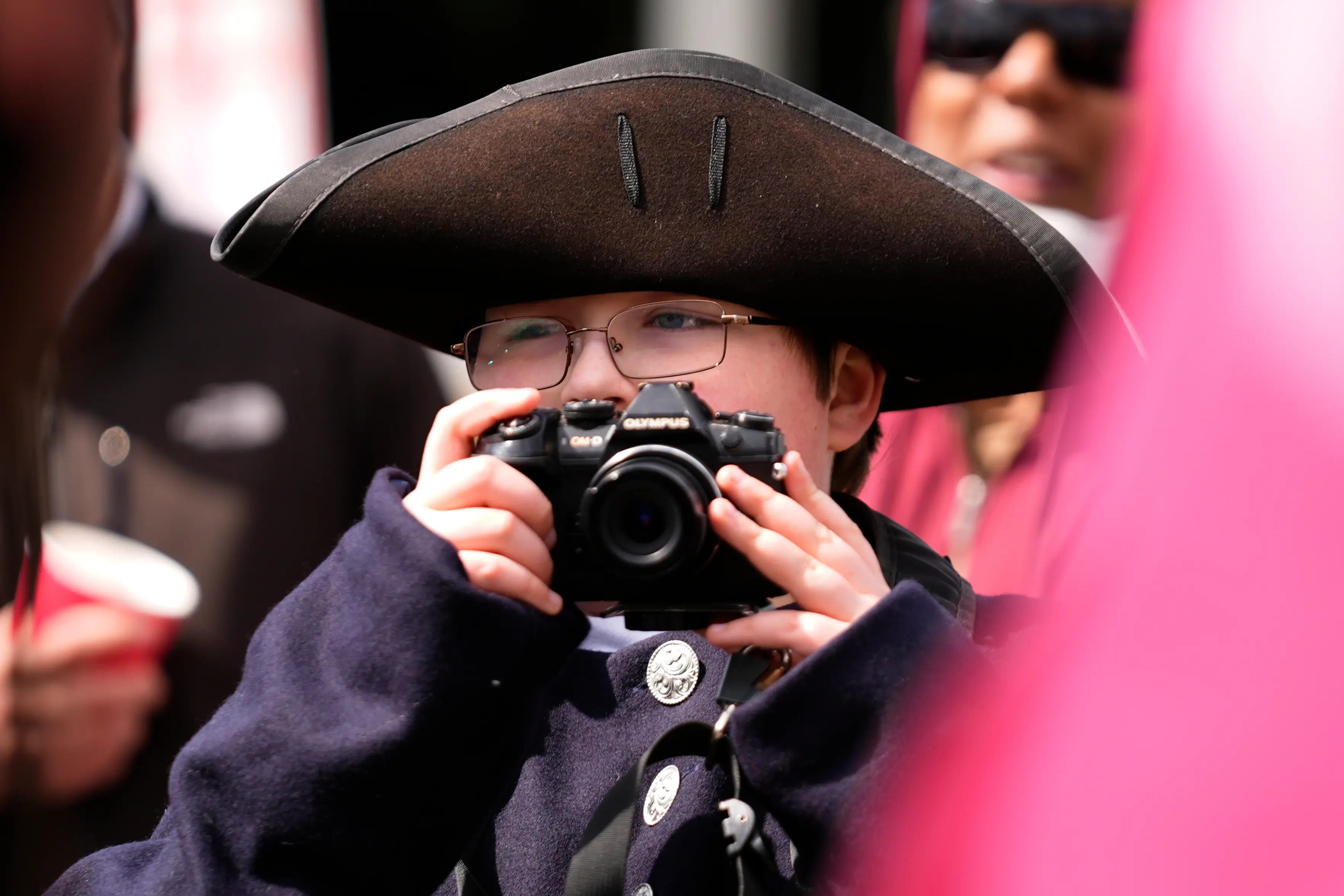
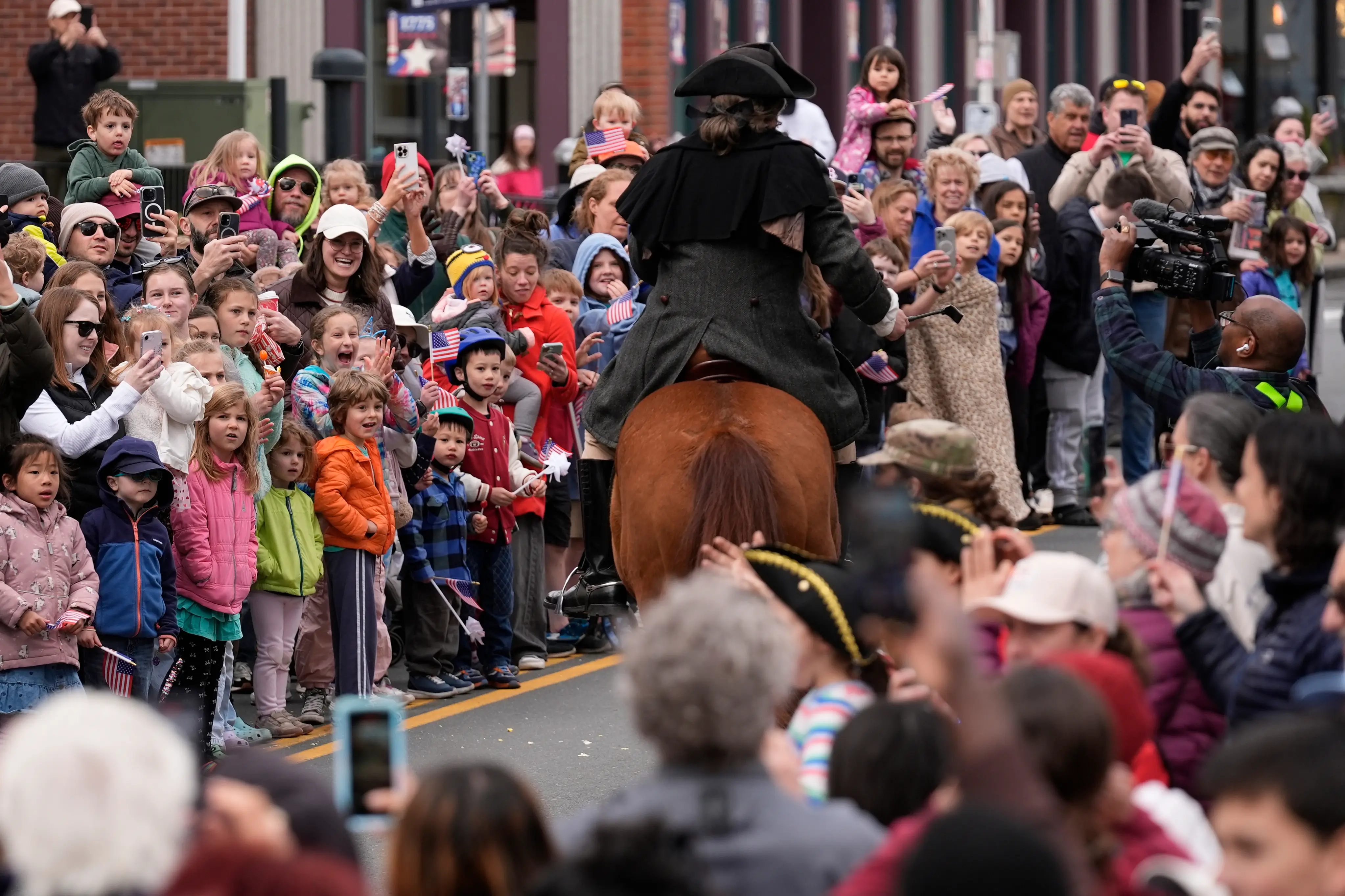
Residents lined the narrow streets as the rider passed, some lifting phones to record while others waved, clapped and called out, “Here he comes!” and “We love you, Paul!”
Recommended Videos
The ride cut through dense city blocks where everyday life continued alongside the spectacle — people walking dogs, jogging and moving through parks and apartment-lined streets, some pausing to watch, others carrying on.
Mary McCabe, who came from Lowell with her daughter Cecily, said it was interesting “just to see how different messages traveled back then.”
Cecily, who said she loves learning about the American Revolution, said seeing the reenactment in person made history feel more real.
“It’s really cool because I can actually see it with my own eyes,” she said.
More than a century-old tradition
Brig. Gen. Richard Reale Jr. of the National Lancers, part of the Massachusetts Organized Militia, portrayed Revere. He said the act serves as an important tribute to “tradition and patriotism” as America marks 250 years since the nation’s founding.
“The unit’s been doing this for well over 100 years, and I believe the same thing: It’s important to remember our patriots on a day like today — those who helped found this country and those who continue to preserve it. We thank our armed forces.”
The reenactor, dressed in Colonial costume and accompanied by another horseman, traced the route taken by Revere 251 years ago as he alerted militias about British movements.
Accompanied by a police escort, Reale made his way through the narrow streets of Charlestown, under an expressway to Somerville and then along the main streets of Medford and Arlington — passing salons, laundromats, restaurants and plenty of Dunkin’ stores.
People along the route popped out of their homes or stopped their cars to watch him pass. Trotting along on his horse, the rider repeatedly yelled, “Regulars are coming" and "Redcoat are out" while occasionally urging people to grab their muskets.
Large crowds greeted the rider in Medford, where he stopped at the site of what once was a tavern that Revere visited and quizzed the crowd on what they knew about the silversmith.
Outside Arlington town hall, resident Vernon Brown said the reenactment resonates deeply in a place tied to the Revolution’s earliest fighting.
“It’s Patriot’s Day — one of the great holidays of Massachusetts. We love it,” he said. “I think in Arlington here, where the Revolution really started — the first pitched battle was here — seeing Paul Revere just brings home how great America is and how everybody really does love this country.”
A second rider finished his ride in Lexington, where he met up with a reenactor playing another midnight rider, William Dawes.
A Revolution turning point
Revere's ride took place on April 18, 1775, when the silversmith and express rider was dispatched to Lexington to warn Revolutionary leaders Samuel Adams and John Hancock that the British were coming to arrest them. He then headed to Concord to warn about raids on military stockpiles.
Revere reached Lexington around midnight, and Dawes got there along a different route soon after with the same message.
Their efforts resulted in militiamen, muskets in hand, confronting a much larger contingent of British regulars marching from Boston on the Lexington Battle Green. The British regulars were eventually chased back to Boston, where militias pinned them down for 11 months in what became known as the Siege of Boston.
“It’s important because you have to have someone to meet the British troops,” said Nina Zannieri, executive director of the Paul Revere Memorial Association, which owns and operates the Paul Revere House. “It becomes a turning point. If no patriots had turned out on the green and the British had just rolled into town, it would have been different. But they actually meet resistance.”
Some aspects of the historic night are not part of this year's event, such as Revere taking a boat to Charlestown before starting his ride.
Nor is there Revere’s brief detention by a British patrol on his way to Concord after leaving Lexington. Revere was ultimately let go without his horse after convincing the British that hundreds of patriots were waiting for them, and he returned to Lexington to see the end of the battle.
“It’s basically important that he leaves Boston. He rides. He’s alerting people. Other people are out,” Zannieri said. “He starts a chain reaction, and he accomplishes his mission even though he gets stopped and held. He’s lucky he wasn’t killed.”
Then and now
While Revere dodged patrols and contended with rutted and muddy roads, his 21st century counterpart had it easier, traveling on pavement and passing through a world of stoplights, car dealerships and bustling downtowns that Revere never could have imagined. The 2026 Boston Marathon took place at the same time, though the routes did not overlap.
Michelle DiCarlo-Domey, who organizes the ride each year for the National Lancers, said thousands come out to see history come alive and show their patriotism.
“Whenever you can interact with the riders and the horses, it can help carry history on,” DiCarlo-Domey said. “Kids can relate to what they learn in school. And where else do you see two horses running down the street?”
__
AP journalist Leah Willingham contributed from Boston.