

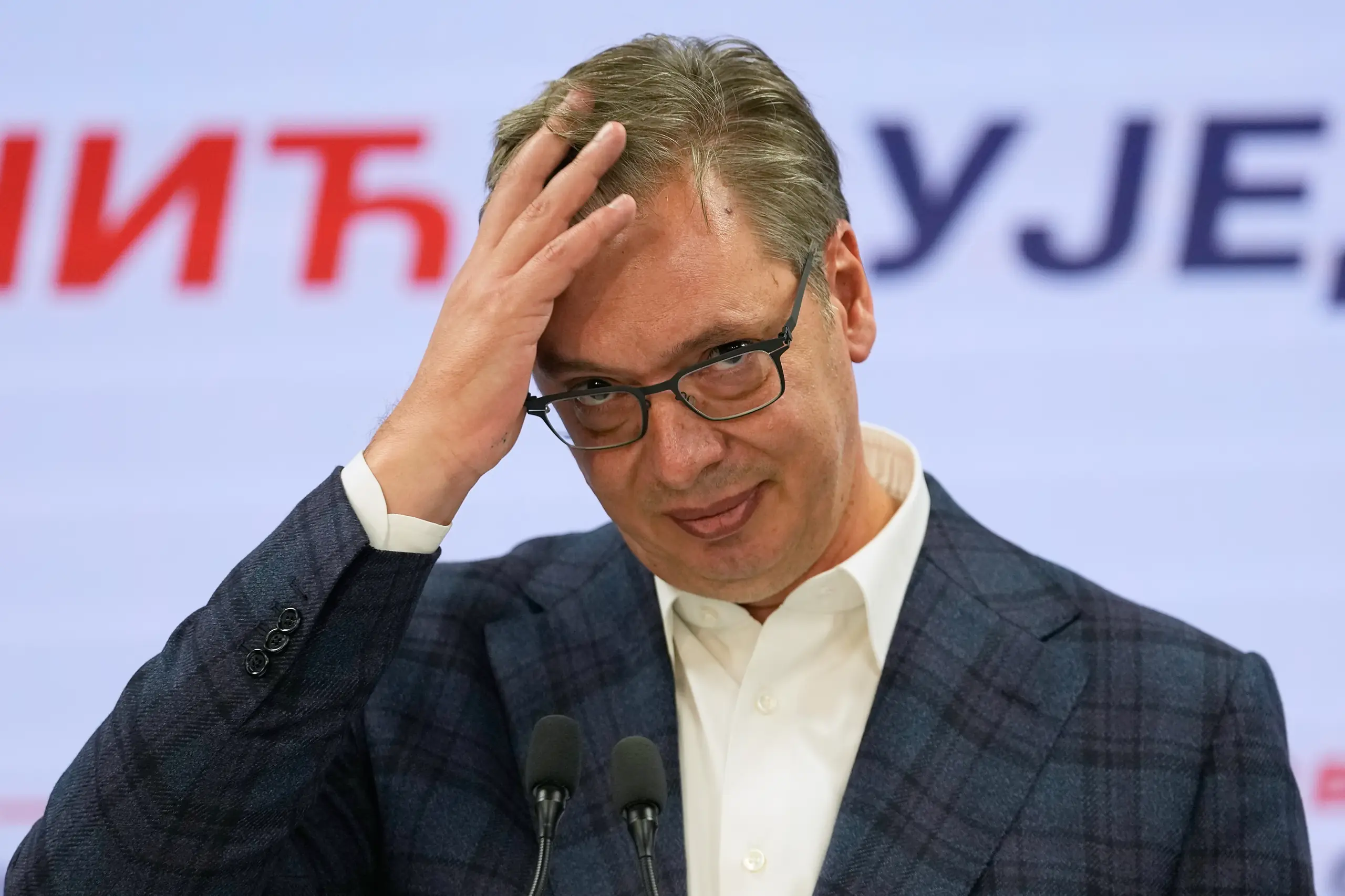
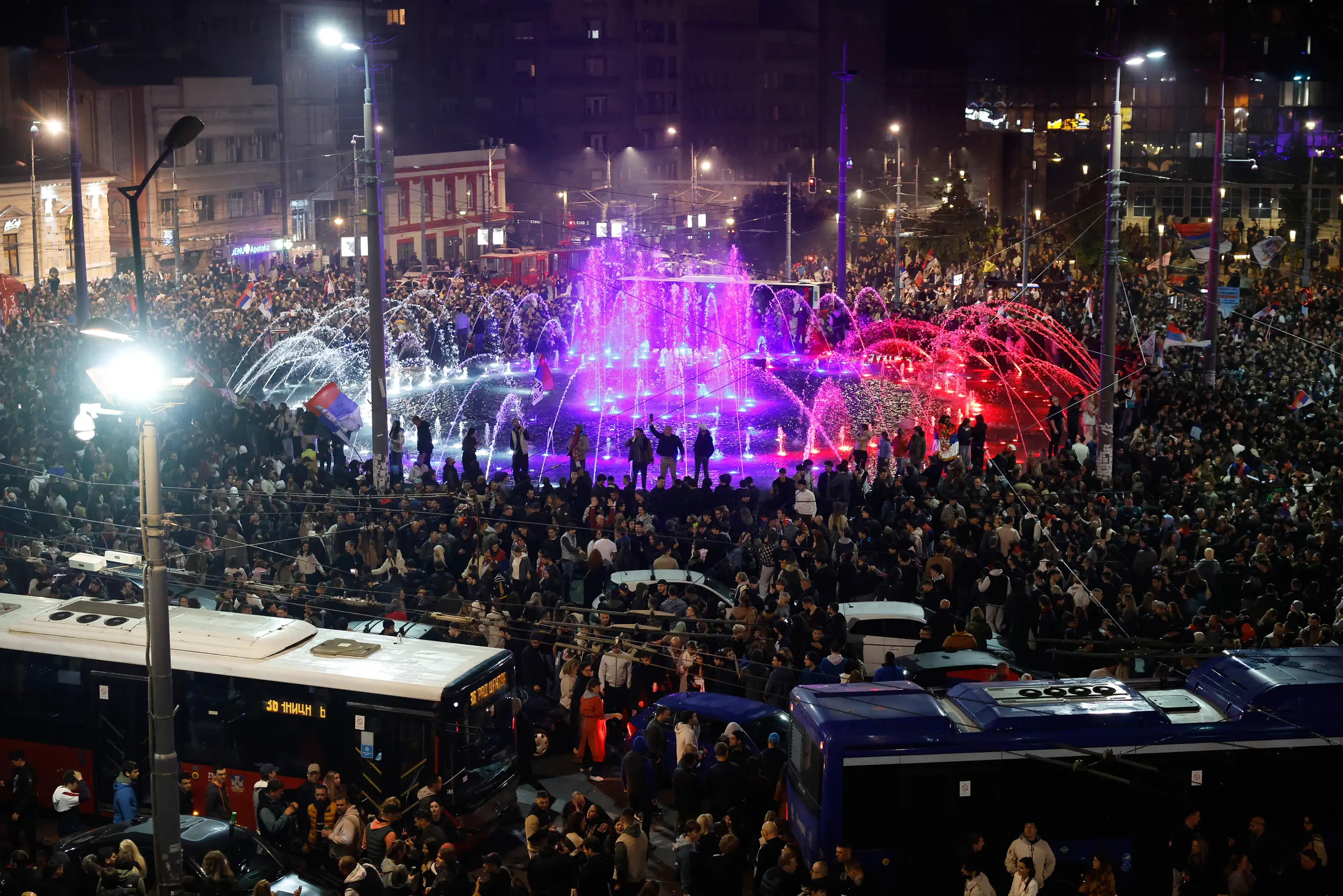
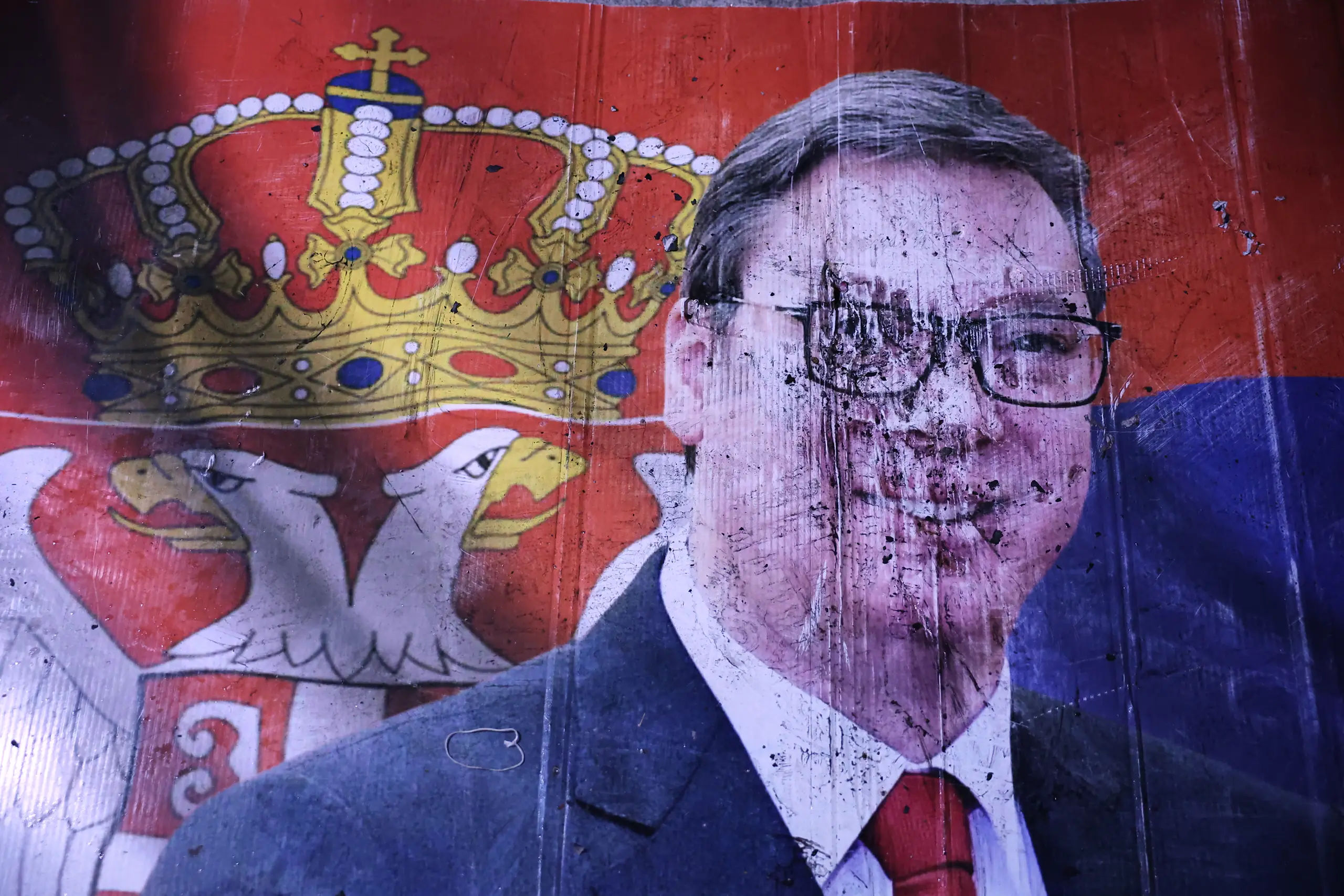
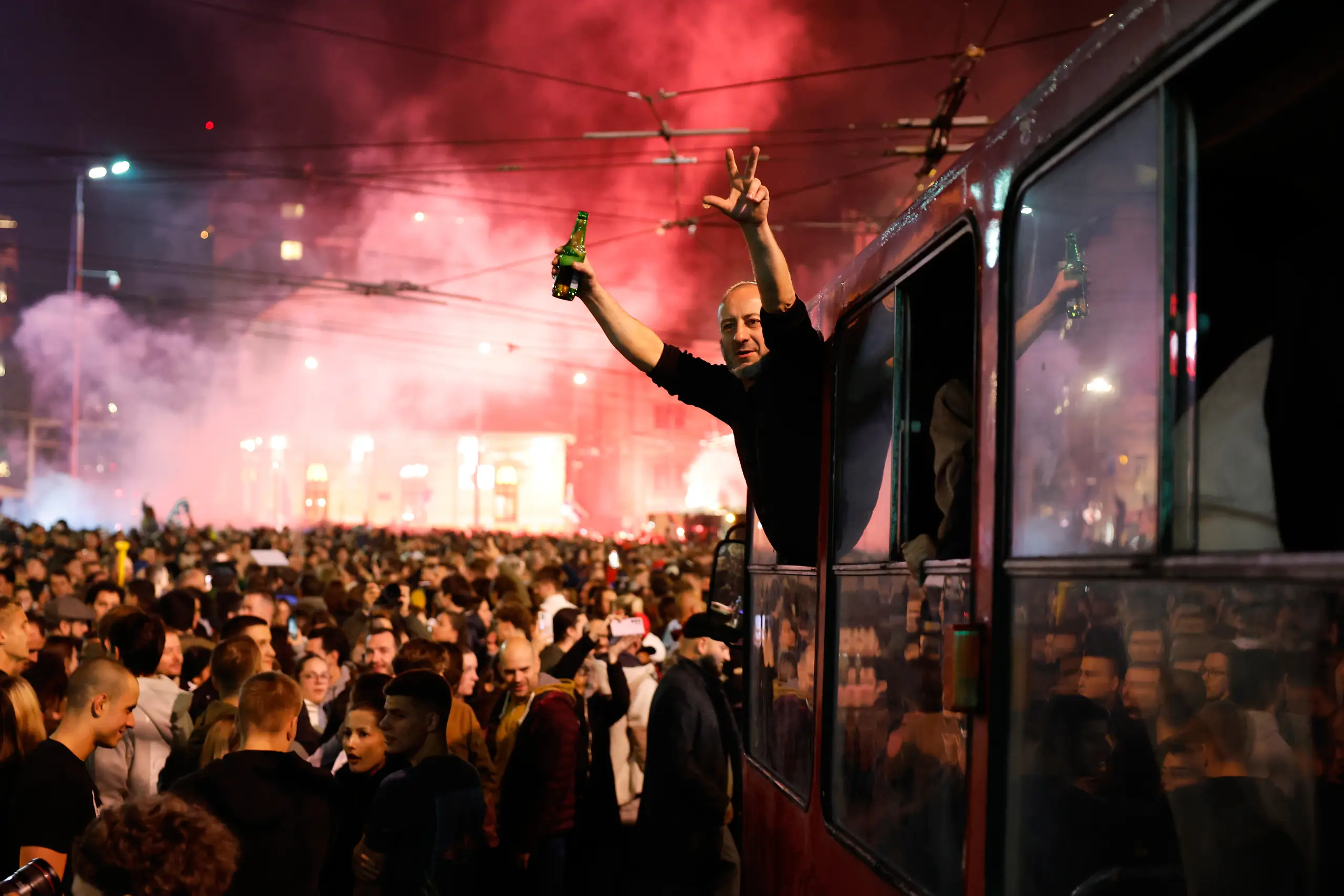
BELGRADE – Serbia's populist strongman Aleksandar Vucic dominated the Balkan country's politics for 14 years. Then came the students.
The long-ruling authoritarian leader on Sunday conceded the defeat of his right-wing Serbian Progressive Party to a grassroots movement of university students who led protests for almost two years against him before unseating him in a historic change of government.
Recommended Videos
The 56-year-old political veteran easily outplayed political opponents in the past and thought he could do it again. Ahead of Sunday's ballot he pulled a maneuver in the style of his ally Russian President Vladimir Putin when he resigned the presidency to pursue a bid to become the prime minister.
Vucic then launched a fierce campaign involving favorable around-the-clock coverage on state media and attacks on opponents. He handed out cash to voters and promised higher pensions, new roads and cheaper medicines.
It didn't work. The diverse youth movement's message that rampant corruption, cronyism and organized crime under Vucic were eating away at the country resonated widely with voters.
The student protests first started in 2024 after a collapsed canopy at a renovated train station in Serbia's north killed 16 people, triggering claims that graft-fueled negligence led to poor construction work and eventually to the crash.
Defiant, Vucic on Sunday blamed his defeat on foreign interference.
“I want people to know,” he said. “This was the verification of a revolution that they carried out directly with support of different European countries and the deep American state, the one that is also against President (Donald) Trump.”
Vucic began his career as an ultranationalist
During a political career spanning more than 30 years, Vucic morphed from being an extreme nationalist who supported aggression against non-Serbs in the former Yugoslavia to a populist who shifted his preferences to balance between global powers and influences.
During the wars in the 1990s, Vucic was one of the radical party leaders who advocated the creation of a “Greater Serbia” that would include territories in Croatia and Bosnia where minority Serbs live. Those policies are widely blamed for a series of bloody conflicts that left over 100,000 people dead and displaced millions.
Vucic was known for fiery speeches, including one in Serbia’s parliament where he said that for each Serb killed in the Bosnian war, 100 Bosnian Muslims must die. He later said that he didn’t mean it literally.
As information minister in the late 1990s, Vucic oversaw media critical of then-President Slobodan Milosevic slapped with heavy fines or shut down altogether. He shifted away from ultranationalism to a proclaimed pro-EU stance on the eve of his party’s electoral win in 2012.
He embraced Europe for a time
In office, Vucic positioned himself as pro-European and pro-Russian, and as an admirer of Trump. Ahead of the decisive ballot, however, Vucic reembraced his hard right roots and turned to Putin again as he struggled to restore his shaken voter base.
Vucic defied the EU last month by allowing a hero’s funeral in Belgrade for Ratko Mladic, the former Bosnian Serb army commander convicted of genocide by a U.N. court in the Netherlands.
The ruling SNS party then allied with the Serbian Radical Party, to which Vucic once belonged. Its leader, Vojislav Seselj, was Vucic's early political mentor and was also convicted of war crimes committed during the Yugoslav conflicts of the 1990s.
“It is no coincidence that Vladimir Putin said he hopes that I will be the prime minister,” Vucic boasted days ahead of the ballot, ditching the proclaimed pro-EU position that helped his populist party come to power in 2012.
Vucic controlled Serbia for 14 years
In the past 14 years, Vucic served as a deputy prime minister, the prime minister and president.
While in office as president for nearly 10 years, Vucic turned the largely ceremonial post into the center of power in the country. He was known for frequent addresses to the nation and perpetual appearances in pro-government media.
“He is a competitor who has mastered a technology of governing that is based on stick and carrot, and the idea that nobody but him is right,” Dejan Pavlovic, from Belgrade's Faculty of Political Sciences, told The Associated Press recently.
Pavlovic described Vucic’s 14-year rule as a “textbook regime” of autocracy, with his party extending its control over the media, judiciary and other institutions, leaving nothing to chance.
“Cover it all: control the media, control the judiciary, control all institutions,” he explained.
In the highly organized ruling SNS party, Vucic commanded ultimate authority and loyalists were rewarded through lucrative deals with the state and protection from prosecution, Pavlovic said. Vucic, he added, “created a whole new elite in the Serbian society and that elite knew how to be thankful.”
Vucic now says he will fight again from the opposition
During the student-led protests, Vucic fenced off a central park outside his office in Belgrade and installed tents with groups of supporters as an apparent human shield. Investigative reporters in Serbia have identified some of the camp residents as people with criminal backgrounds and tied Vucic to criminal clans, which he refuted.
Elections under Vucic were increasingly marred by reports of voting irregularities, violent incidents and complaints that his control over pro-government media and use of public funds to bribe voters gave his party an unfair advantage.
As he conceded defeat, Vucic vowed to keep fighting.
“Our structure is very firm, we are very united and strong, and we are used to being in opposition,” he said in a Sunday night speech. “Most of us have spent more time in opposition than in government.”
Former President Boris Tadic said Vucic would not have conceded in case of a less convincing student victory.
But Tadic said that under the circumstances, “he could not avoid it.”