



NEW YORK – WhyHunger would have liked to be out of service by now.
Singer-songwriter Harry Chapin and radio DJ Bill Ayres founded the grassroots support organization in 1975 with the idea they could eradicate hunger at its root by leveraging their music industry connections to fund community groups advancing economic and food security. And, yet, the global nonprofit is hitting the half-century mark this year — an anniversary that reflects the sobering need for continued food assistance.
Recommended Videos
“It is pride and shame in equal measure,” said Jen Chapin, the daughter of Harry Chapin and a WhyHunger board member, at the nonprofit's gala Wednesday night. “That this organization is still relevant when hunger is a completely solvable problem — it’s embarrassing.”
Established amid transformative expansions of federal food programs just before the United States significantly cut social welfare, WhyHunger marks its 50-year milestone at a time of worsening food insecurity worldwide when some of the wealthiest countries are decreasing their humanitarian commitments.
As part of the Trump administration's swift scaling back of the federal government, funding streams are being shut off for many in the nonprofit’s network that help millions of hungry people access nutritious food.
Chapin said the immense need, and “that the political conversation has gone backward,” would be “infuriating” to her late father.
“But he wouldn’t pause to rant,” she said. “He’d be like, ‘OK, what can we do?’”
The U.S. Department of Agriculture estimates more than 47 million people, including nearly 14 million children, lived in food-insecure households in 2023 — a crisis WhyHunger blames on “deeper systemic issues” of rising inflation, the rollback of pandemic relief and poor wages.
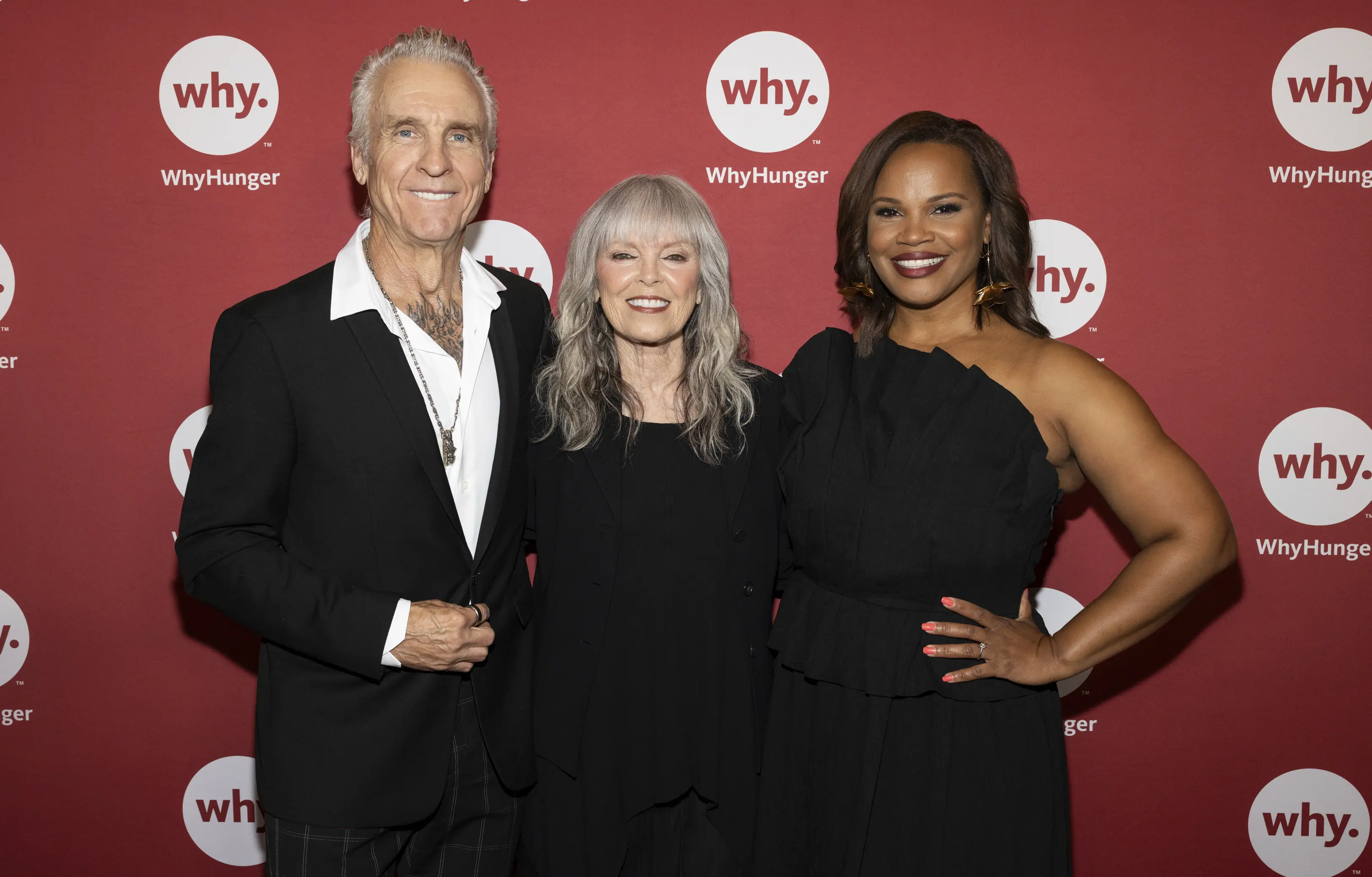
Those statistics were “ridiculous” to Grammy award-winning rockers Pat Benatar and Neil Giraldo. The couple, which performed its hit “Love Is a Battlefield,” was recognized Wednesday with the ASCAP Harry Chapin Humanitarian Award, given to artists who use their influence to foster social justice.
Giraldo said they’ve been involved with WhyHunger for 30 years. The support began with their relationship to Harry Chapin and his family, as well as their advocacy for children’s causes.
“Music brings so many people together,” Benatar told the Associated Press. “I think it's just always a good start.”
“If we can help in any way, that's what we're trying to do: just be helpers,” Giraldo added.
The annual awards gala, hosted by Jazz at Lincoln Center’s Frederick P. Rose Hall, raised more than $125,000 on Wednesday night alone.
The proceeds directly supported WhyHunger's programs in the U.S. and 24 other countries. The nonprofit aims to not only feed people but create systems-level change by training local farmers, connecting people to government benefits, promoting indigenous food sovereignty and defending food workers' rights.
“It’s not enough to feed people for a day,” Jen Chapin said. "It’s not even enough to teach a man to fish so that he can get his own food. You have to also create the social movement so that there is a food system that enables that farmer, that fisherperson, to get a fair price for their work, feed their local community.”
Among the benefactors were WhyHunger Board of Directors Chair Cindy Secunda and billionaire Bloomberg L.P. co-founder Tom Secunda, whose family foundation has contributed over $8 million to WhyHunger since 2020.
Like many WhyHunger supporters, Cindy said she was first introduced to their work during Harry Chapin concerts in college. She would donate $10 or so, per his end-of-show requests. But she said she didn't ramp up her giving until more recently when she was invited to see the work of WhyHunger's partners up close.
“They get so much more done with such a small staff," she said. "I’ve never seen anything like it.”
The nonprofit has not increased its staff totals much over its 50 years to “stay nimble and serve those who are serving,” according to Chapin.
The biggest change has been the philanthropic sector's overall approach to fighting food insecurity, staff say. Paternalistic, top-down attitudes toward aid were more dominant when the organization was founded. The idea that hunger is connected to issues of racism and climate was not as widespread then, according to Debbie DePoala, WhyHunger's senior director of communications
The nonprofit has long centered public policy in conversations about hunger, according to Jan Poppendieck, a former board member and CUNY professor who has studied the history of food assistance. She hopes the outlook isn't lost.
“What they have done best is assist local innovative progressive organizations," Poppendieck said. “Assist them financially because of this ability, as I say, to extract moolah from the entertainment industry, and assist them with sharing best practices, introducing them to each other, bringing them together so that people can learn from each other.”
___
Associated Press coverage of philanthropy and nonprofits receives support through the AP’s collaboration with The Conversation US, with funding from Lilly Endowment Inc. The AP is solely responsible for this content. For all of AP’s philanthropy coverage, visit https://apnews.com/hub/philanthropy.