

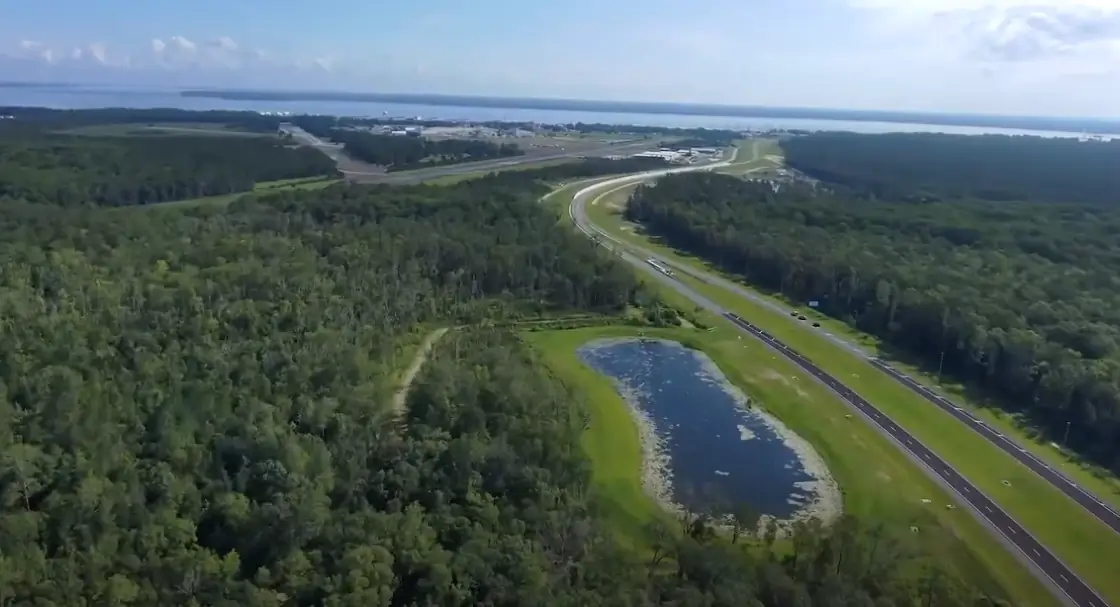
CLAY COUNTY, Fla. – Clay County drivers are days away from a major new commuting option. The Florida Department of Transportation expects to open the final Clay County segment of the First Coast Expressway by noon Monday, June 29. Once open, the expressway will connect three northeast Florida counties, completing a project that began in late 2019.
“This is the final Clay County segment of the First Coast Expressway,” said Jacob Pickering, public information officer for FDOT. “Clay County has really experienced a lot of improved efficiency with this First Coast Expressway — another option for you.”
Recommended Videos
US 17 to Leonard C. Taylor Parkway
The new stretch will allow drivers to travel the expressway from US 17 to Leonard C. Taylor Parkway. New traffic signals on Leonard C. Taylor Parkway will also be activated Monday, giving drivers coming from the east the ability to head north directly onto the expressway — including right off the Shands Bridge.
“Once they get off the Shands Bridge, they can immediately go north and access the First Coast Expressway right from the bridge now,” Pickering said. “This is that final connection that connects folks all the way down right to the Shands Bridge up to the First Coast Expressway at US 17.”
The First Coast Expressway is already open from US 17 north to Interstate 10, meaning Monday’s opening completes the full Clay County corridor.
3 new bridges, electronic tolling
The new segment includes three new bridges, a brand-new drainage system and an all-electronic toll facility. Drivers without a SunPass can still use the road — the system will automatically read their license plate.
“What this is, is really good for the state of Florida, because what we’re doing is giving that option and proving to our motorists on these roadways that we’re thinking of you guys and we’re trying to give you new options here,” Pickering said.
Drivers who will benefit most
Drivers in Green Cove Springs and St. Johns County are expected to see the greatest impact from the new segment. US 17, which runs through the center of Green Cove Springs, is known for heavy congestion during peak travel hours. The new expressway gives commuters an alternative to crowded surface roads like Blanding Boulevard and US 17.
“What we’re hoping that will happen here for the folks who live in Green Cove, who maybe work in Orange Park or Jacksonville — this will give them a new option to get home quicker,” Pickering said.
Residents of St. Johns County communities such as Fruit Cove will also benefit, gaining quicker access to the expressway than ever before.
“If you live in St. Johns County, you can now access the First Coast Expressway much sooner than you could before, right at the bottom of the Shands Bridge,” Pickering said. “That really gives folks in Fruit Cove and Green Cove this brand-new option to really access that urban parkway really fast.”
Limited access design
Because the road is a limited-access toll facility, FDOT does not expect the kind of peak-hour backups common on surface roads.
“It is limited access, so we don’t expect peak rush hours to build up on this section of the roadway,” Pickering said.
As drivers get familiar with the new segment, FDOT is urging patience and caution. The department’s Target Zero initiative — aimed at eliminating fatalities and crashes on Florida roadways — remains central to its mission.
“We just really want to tell drivers to be safe out there, and as folks get used to this new roadway segment in the next week, give it some time and be patient with everybody around you,” Pickering said.