

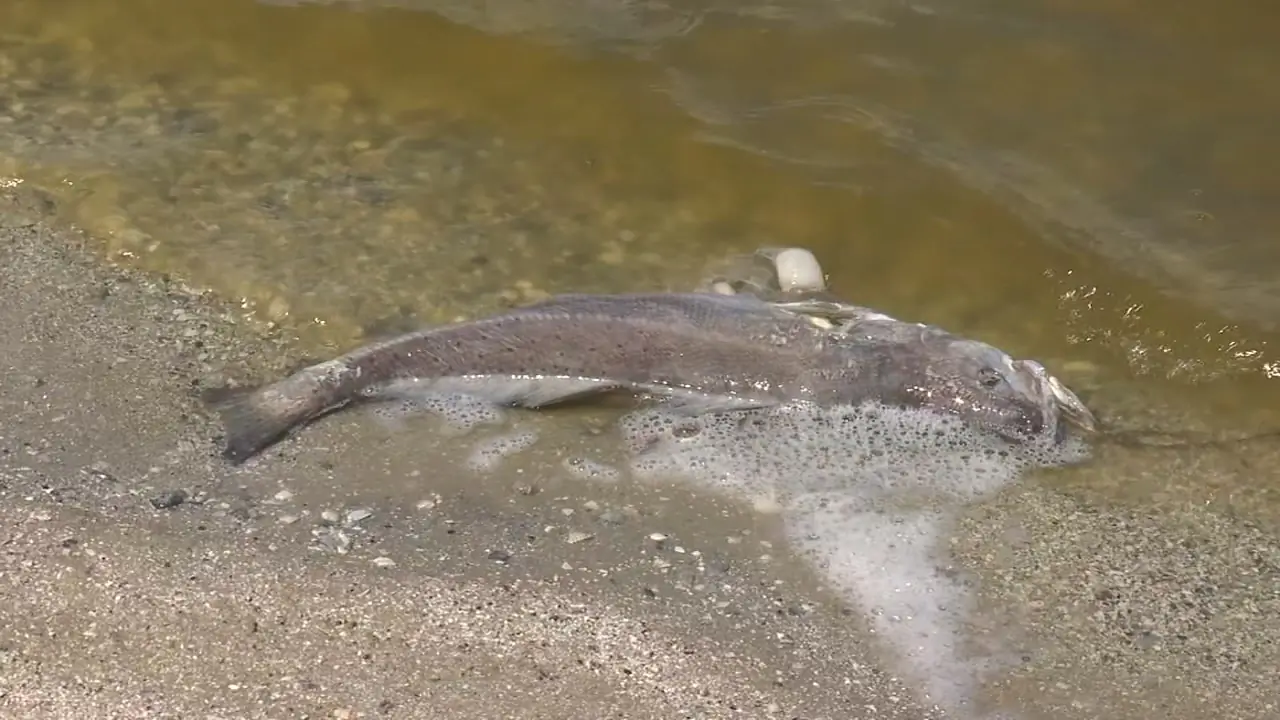
PONTE VEDRA BEACH, Fla. – An investigation is underway after a recent fish kill at Guana Preserve that fishermen say killed hundreds of trophy-sized trout, redfish and other popular species.
At least one St. Johns County commissioner has met with the Florida Department of Environmental Protection and Guana Preserve officials to discuss the incident.
Recommended Videos
St. Johns County Commissioner Clay Murphy told News4JAX that identifying the source of the pollution is the top priority after visiting the preserve on Thursday.
“We went over some information. The weather was a little tough, so we couldn’t go out and take samples in the airboat, but we’re going to do that next week,” Murphy said. “Their concern was a spike in what they call bacteria, which was very unusual to them.”
Environmentalists say that a spike in bacteria may have contributed to the fish kill.
Captain Matt Chipperfield, a local fishing guide and environmentalist, said stormwater runoff from nearby communities may be carrying pollutants into the preserve.
“The primary source of the effluent that’s coming in, in the form of stormwater runoff, is through the Sawgrass community,” Chipperfield said.
Chipperfield said storm drains, canals, ponds, golf courses and lawns feed into various rivers and canals which eventually flow into a non-tidal lagoon in the Guana Preserve, where algae blooms can feed on accumulated nutrients.
Chipperfield said a recent DEP study showed a significant increase in pollution over the past six years. Environmentalists are preparing a proposal for a water restoration project.
Murphy said county officials need more evidence before determining the cause.
“It’s important for us to pinpoint where it’s coming from, because it could be a combination of several things,” Murphy said. “It could be fertilizers coming from lawns. Is it manmade? Is it cattle? Is somebody doing something? Is there illegal dumping?”
Murphy said officials also plan to work with the St. Johns County Sheriff’s Office and examine nearby canals.
He said investigators also want to determine whether the fish kill was caused by a natural event.
“We are going to go to specific areas of the estuary and take water samples,” Murphy said. “We’re going to find out if we can find a smoking gun — whether it’s coming from a particular area or whether there are particular nutrients coming from those areas.”
Murphy said officials plan to map every waterway that feeds into the Guana River system.
Much of the water testing and investigation is already underway. Environmentalists working with the DEP are expected to submit a water restoration plan to the St. Johns County Commission in October or November.
