


JACKSONVILLE, Fla. – The weather across Northeast Florida and Southeast Georgia this weekend was certainly historic.
From the bitterly cold temperatures to seeing flurries, it was a fascinating weekend of weather!
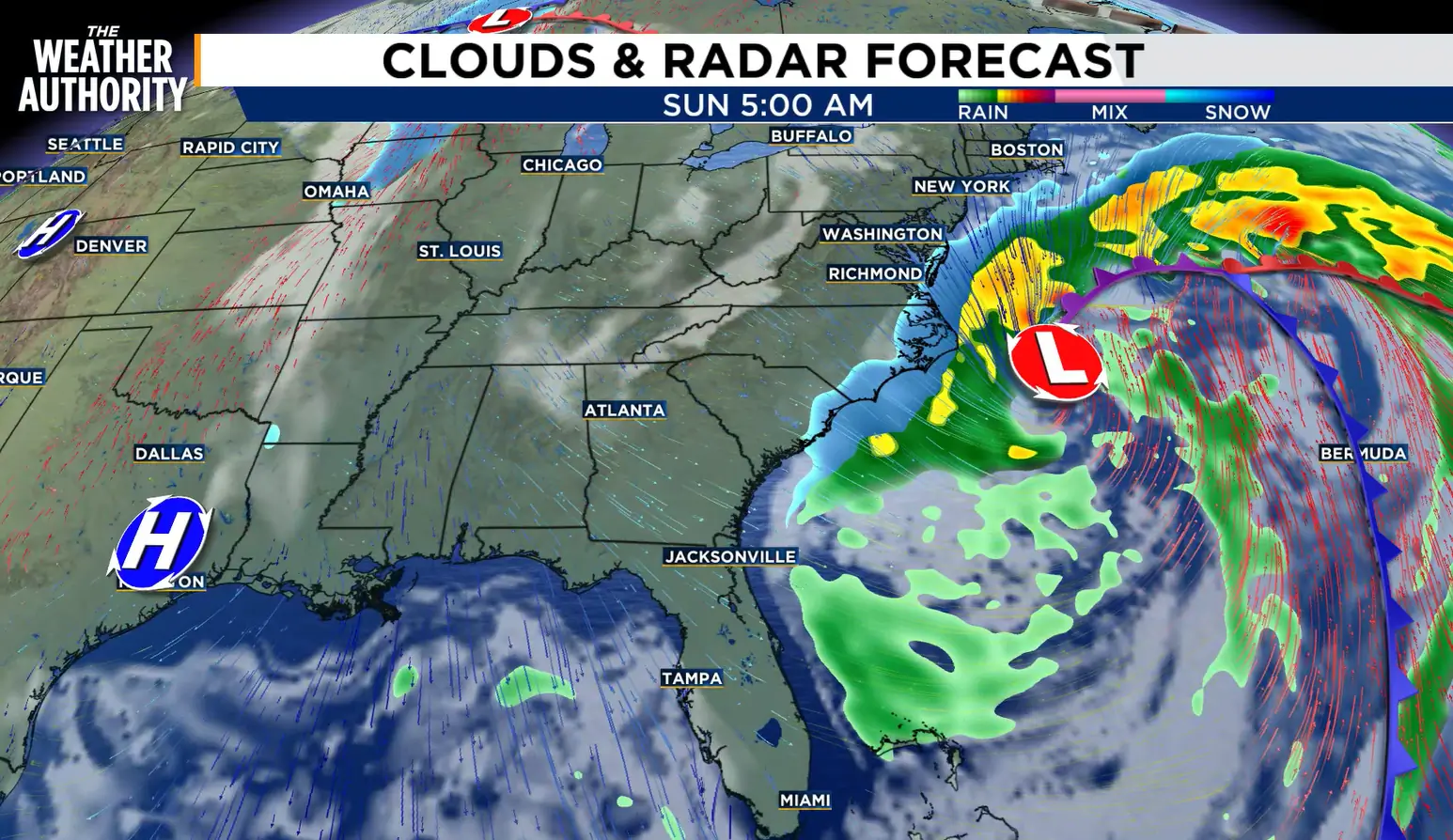
A strong area of low pressure moved across Florida on Saturday and strengthened offshore on Sunday. The northwesterly flow brought frigid temperatures to the area and strong winds.
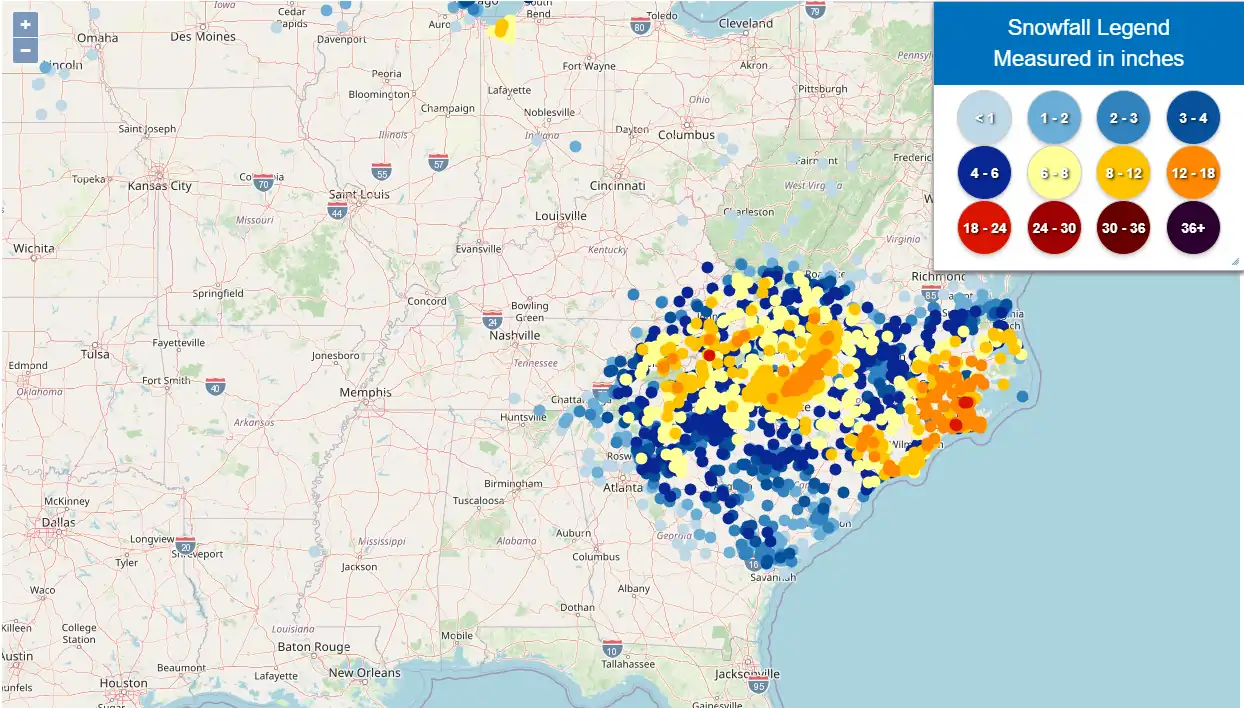
This storm dropped years’ worth of snow across a portion of the Southeast. In fact, looking at the snowfall reports from NOAA, you can see several reports exceeded a foot of snow. This was common across North Carolina.

Visible satellite taken from this morning (Feb. 2) tells the story. If you look over South Carolina and North Carolina, you can see the area of bright white. That area does not move, which means snow is still on the ground. Why is it bright white? It’s because snow reflects more sunlight back to the sensor, which gives it the bright appearance on the satellite.
Snow is still on the ground because of the cold temperatures.
Speaking of the cold, Sunday morning was bitterly cold with temperatures in the teens and 20s, and highs only in the 30s and 40s.

In fact, we set or tied two records at Jacksonville International Airport on Sunday. The low temperature at the airport was 22 degrees, which broke the previous record of 24 degrees in 1977. We also tied the record coldest high temperature as well, which is 43 degrees in 1980.
This is only half of the story! With the wind, wind chill values dropped into the single digits and teens.
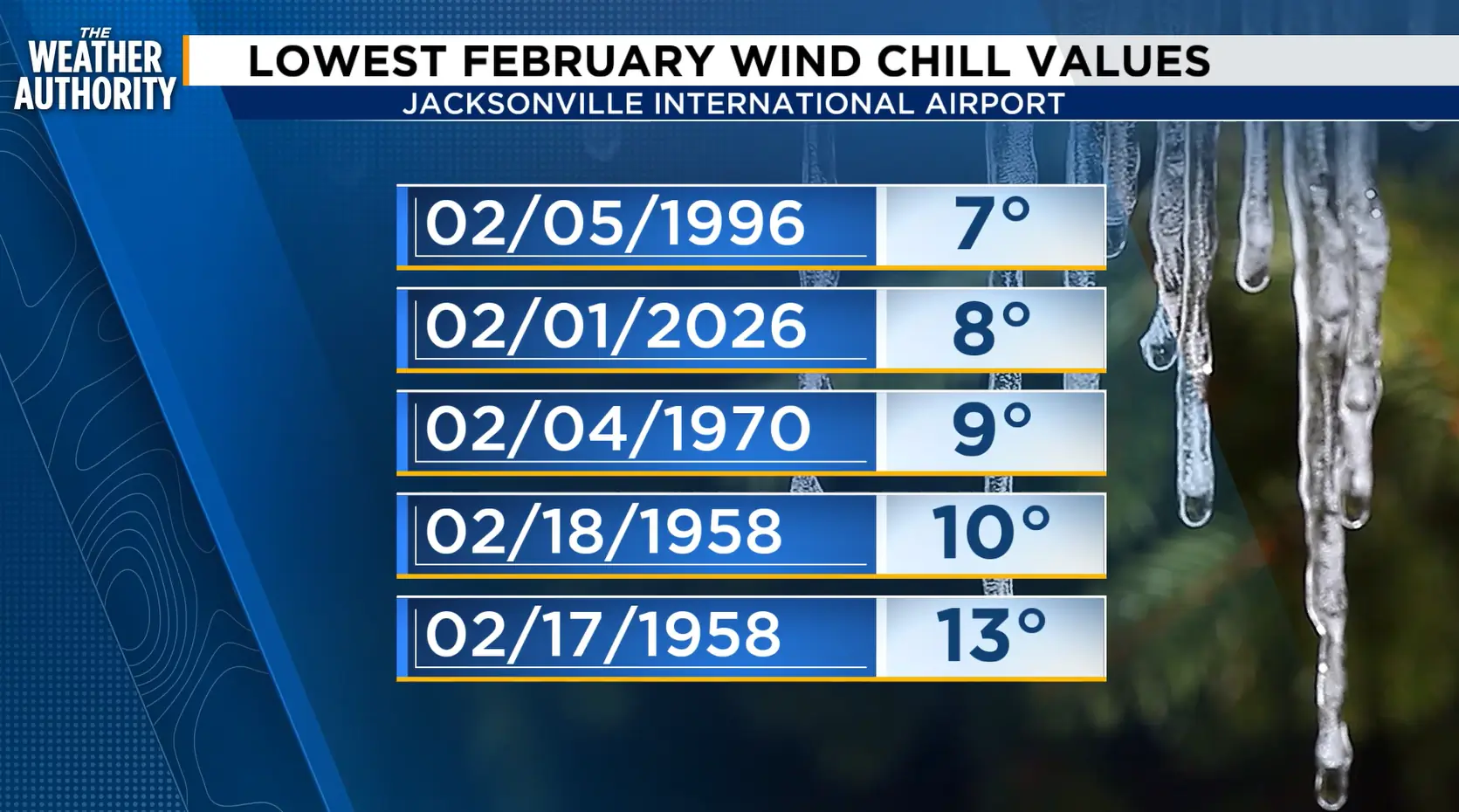
We recorded a wind chill value of 8 degrees at Jacksonville International Airport Sunday morning. This is the second-lowest wind chill recorded for the month of February at the airport since records have been recorded (started recording in 1938).
You may have wondered: Why did this storm produce only snow across the Southeast? It had to do with temperatures from the cloud base to the ground.
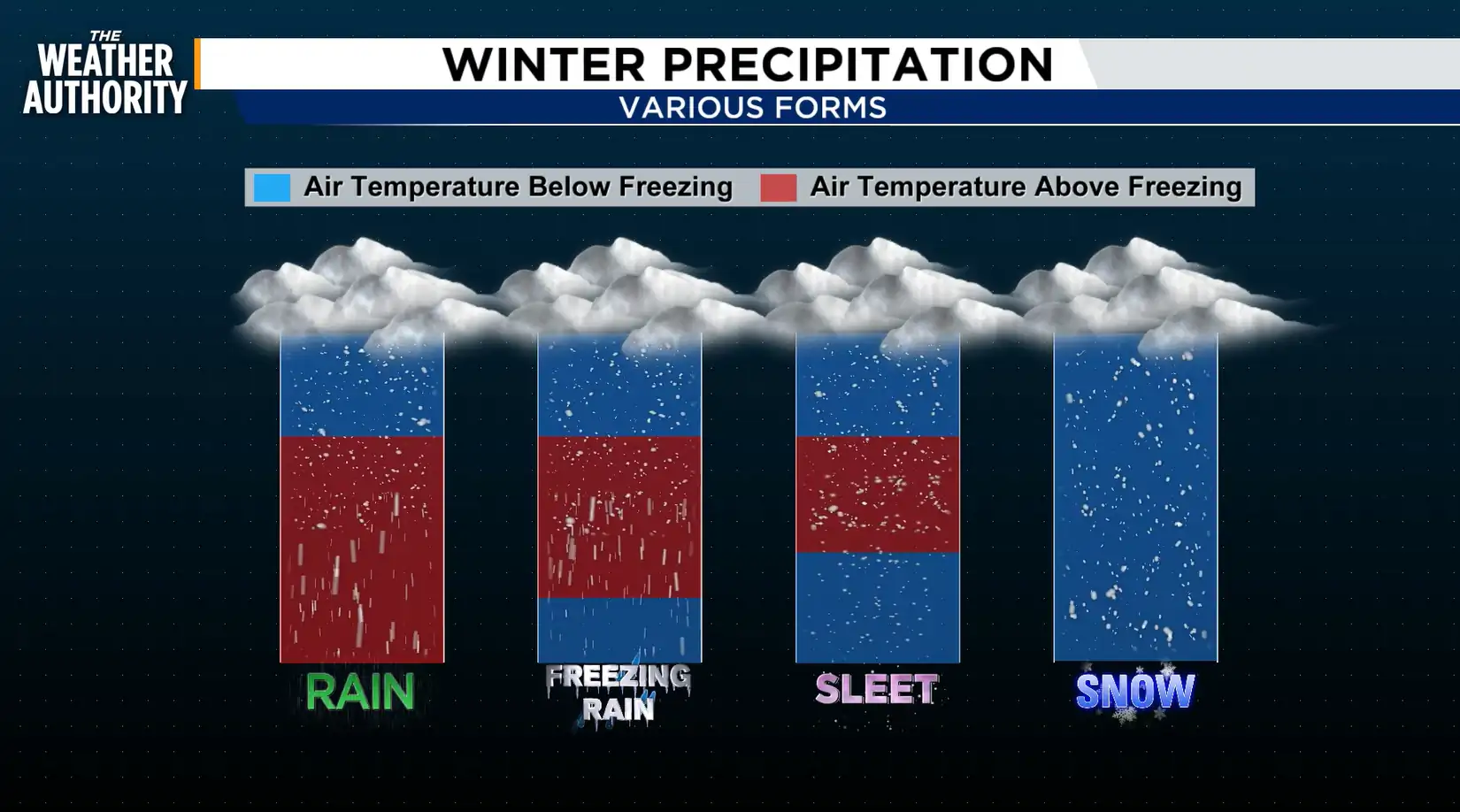
All precipitation in the mid-latitudes starts out as snow regardless of the surface temperature. When a deep layer of warm air extends near the cloud base to the surface, the snow melts into rain.
Freezing rain occurs when snow melts to rain in a warm layer above the surface, then freezes upon contact with the cold surface. There is often a very deep layer of warm air.
Sleet is similar. Snow melts in a warm layer above the surface, then re-freezes into ice pellets in a cold layer above the surface. There is often a very shallow layer of warm air.
Snow occurs when temperatures from the cloud base to the ground are below freezing. There is no melting, which is why the snowflake reaches the ground. This is what we saw over the weekend because temperatures were below freezing from the cloud base to the ground. This is fairly rare for our area!
