



History, it has been said, is written by the winners. President Donald Trump is working that lever of power — again.
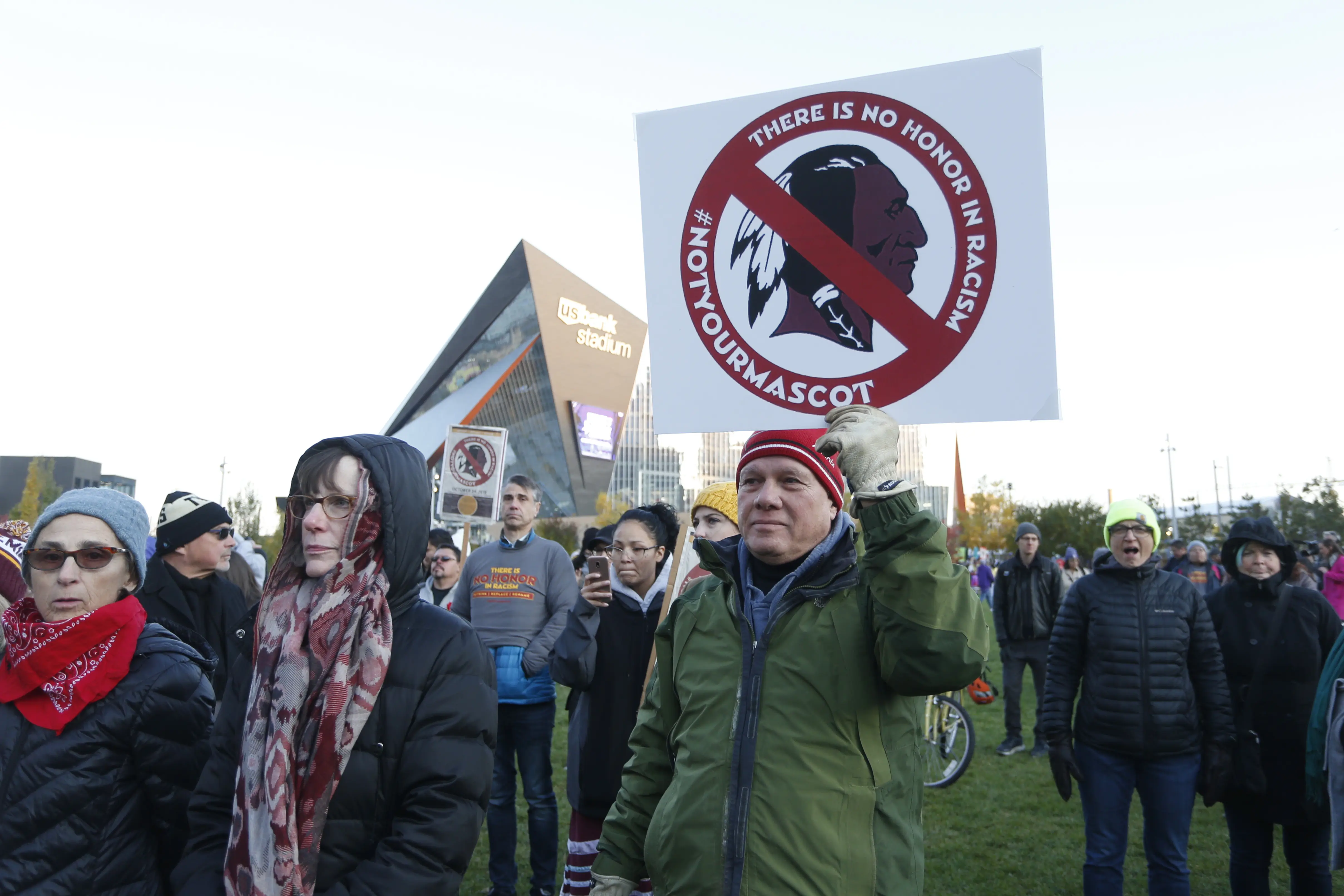
This time, he's insisting that Washington's NFL team change its name from the Commanders back to the Redskins, a name that was considered offensive to Native Americans. Predictably, to Trump's stated delight, an internet uproar ensued.
Recommended Videos
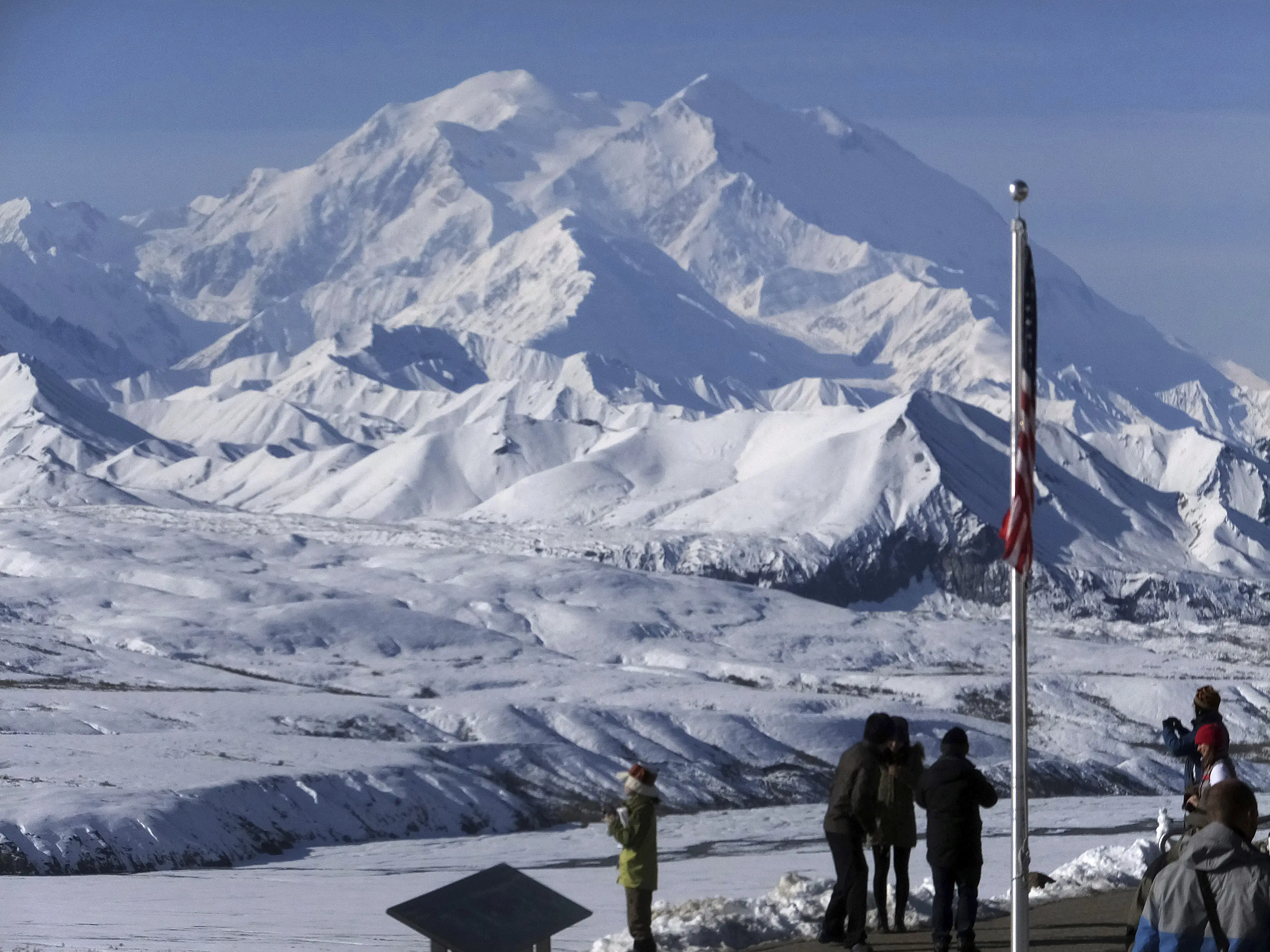
It's a return to the president's favorite rebranding strategy, one well-used around the world and throughout history. Powers-that-be rename something — a body of water, a mountain in Alaska, St. Petersburg, Istanbul, Mumbai, various places in Israel after 1948 — in line with “current” political and cultural views. Using names to tell a leader's own version of the nation’s story is a perk of power that Trump is far from the first to enjoy.
A name, after all, defines identity and even reality because it is connected to the verb "to be,“ says one brand strategist.
“A parent naming a child, a founder naming a company, a president naming a place ... in each example, we can see the relationship of power,” Shannon Murphy, who runs Nameistry, a naming agency that works with companies and entrepreneurs to develop brand identities, said in an email. “Naming gives you control.”
Trump reignited a debate on football and American identity
In Trump's case, reviving the debate over the Washington football team's name had the added effect of distraction.
“My statement on the Washington Redskins has totally blown up, but only in a very positive way,” he wrote on his social media platform, adding a threat to derail the team's deal for a new stadium if it resisted.
In fact, part of the reaction came from people noting that Trump's proposed renaming came as he struggled to move past a rebellion among his supporters over the administration's refusal to release much-hyped records in Jeffrey Epstein’s sex trafficking investigation. Over about two weeks, Trump had cycled through many tactics — downplaying the issue, blaming others, scolding a reporter, insulting his own supporters, suing the Wall Street Journal and finally authorizing the Justice Department to try to unseal grand jury transcripts.
Trump's demand that the NFL and the District of Columbia change the team's name back to a dictionary definition of a slur against Native Americans reignited a brawl in miniature over race, history and the American identity.
Trump's reelection itself can be seen as a response to the nation's reckoning with its racial history after the 2020 police killing of George Floyd. That year, Americans elected Democratic President Joe Biden, who championed diversity. During his term, Washington's football team became first the Washington Football Team, then the Commanders, at a widely estimated cost in the tens of millions of dollars. And in 2021, The Cleveland Indians became the Cleveland Guardians.
In 2025, Trump has ordered a halt to diversity, equity and inclusion programs through the federal government, universities and schools, despite legal challenges. And he wants the Commanders' name changed back, though it's unclear if he has the authority to restrict the nearly $4 billion project.
Is Trump’s ‘Redskins’ push a distraction or a power play?
What's clear is that names carry great power where business, national identity, race, history and culture intersect.
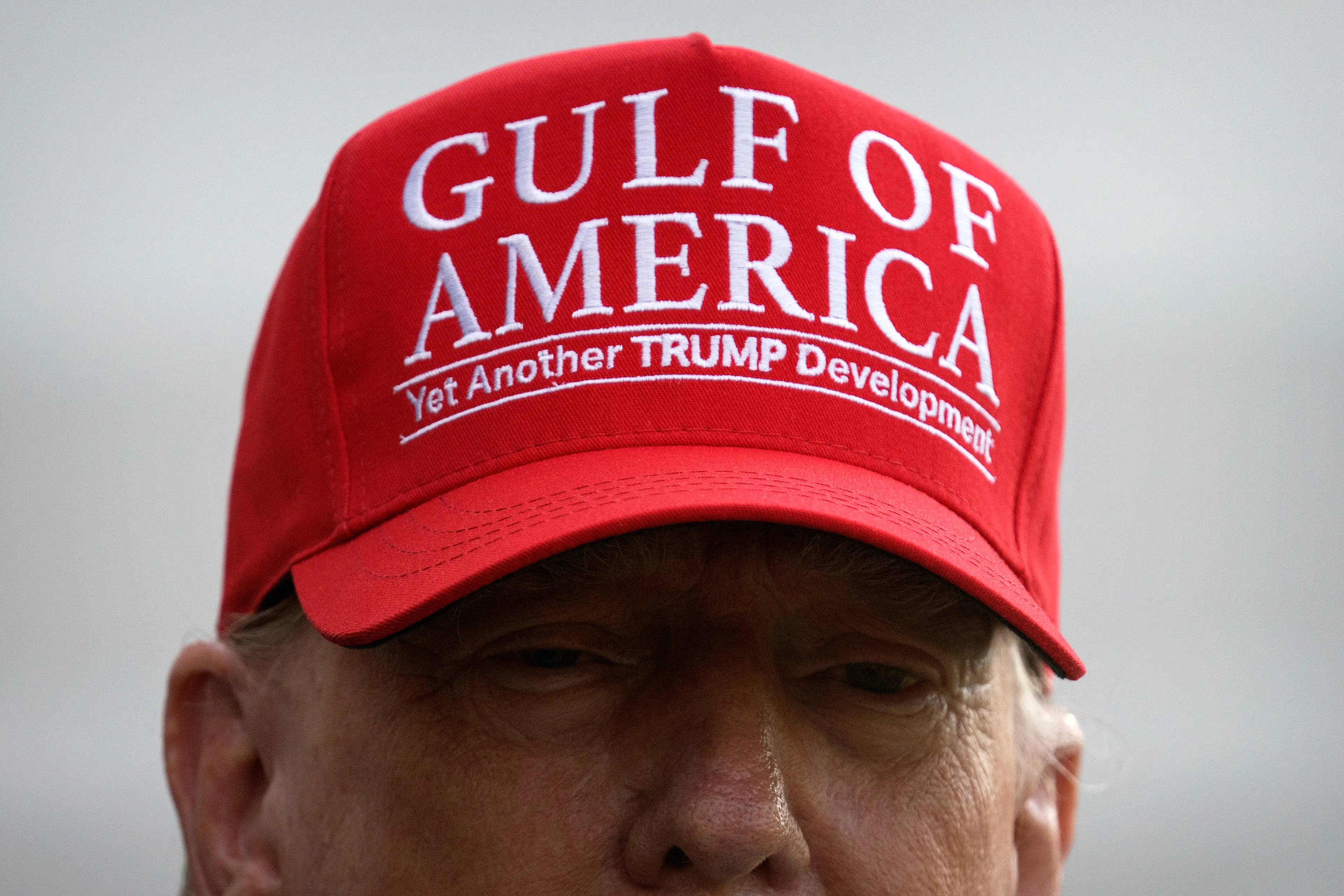
Trump has had great success for decades branding everything from buildings he named after himself to the Gulf between Mexico, Cuba and the United States to his political opponents and people he simply doesn't like. Exhibit A: Florida's governor, dubbed by Trump “Meatball Ron” DeSantis, who challenged him for the 2024 GOP presidential nomination.
And Trump is not the first leader to use monikers and nicknames — branding, really — to try to define reality and the people who populate it. Naming was a key tool of colonization that modern-day countries are still trying to dislodge. “Naming,” notes one expert, “is never neutral.”
“To name is to collapse infinite complexity into a manageable symbol, and in that compression, whole worlds are won or lost,“ linguist Norazha Paiman wrote last month on Medium.
”When the British renamed places throughout India or Africa, they weren’t just updating maps," Paiman wrote. "They were restructuring the conceptual frameworks through which people could relate to their own territories."
This is not Trump’s first rebranding push
Trump's order to rename the Gulf of Mexico as the Gulf of America is perhaps the best-known result of Executive Order 14172, titled “Restoring Names That Honor American Greatness.”
The renaming sent mapmakers, search engines and others into a flurry over whether to change the name. And it set off a legal dispute with The Associated Press over First Amendment freedoms that is still winding through the courts. The news outlet’s access to events in the Oval Office and Air Force One was cut back starting in February after the AP said it would continue referring to the Gulf of Mexico in its copy, while noting Trump’s wishes that it instead be renamed the Gulf of America.
It's unclear if Trump's name will stick universally — or go the way of “freedom fries," a brief attempt by some in the George W. Bush-era GOP to rebrand french fries after the Sept. 11, 2001, attacks.
But there's evidence that at least for business in some places, the “Gulf of America” terminology has staying power. Chevron's earnings statements of late have referred to the Gulf of America, because “that's the position of the U.S. government now,” CEO Mike Wirth said during a Jan. 31 call with investors.
And along the Gulf Coast in Republican Louisiana, leaders of the state's seafood industry call the body of water the Gulf of America, in part, because putting that slogan on local products might help beat back the influx of foreign shrimp flooding American markets, the Louisiana Illuminator news outlet reported.
Renaming is a bipartisan endeavor
The racial reckoning inspired by Floyd's killing rippled across the cultural landscape.
Quaker retired the Aunt Jemima brand after it had been served up at America's breakfast tables for 131 years, saying it recognized that the character’s origins were “based on a racial stereotype.” Eskimo Pies became Edy's. The Grammy-winning country band Lady Antebellum changed its name to Lady A, saying they were regretful and embarrassed that their former moniker was associated with slavery.
And Trump didn't start the fight over football. Democratic President Barack Obama, in fact, told The Associated Press in 2013 that he would “think about changing” the name of the Washington Redskins if he owned the team.
Trump soon after posted to Twitter: “President should not be telling the Washington Redskins to change their name-our country has far bigger problems! FOCUS on them, not nonsense.”
Fast-forward to July 20, 2025, when Trump posted that the Washington Commanders should change their name back to the Redskins.
“Times," the president wrote, “are different now.”
___