

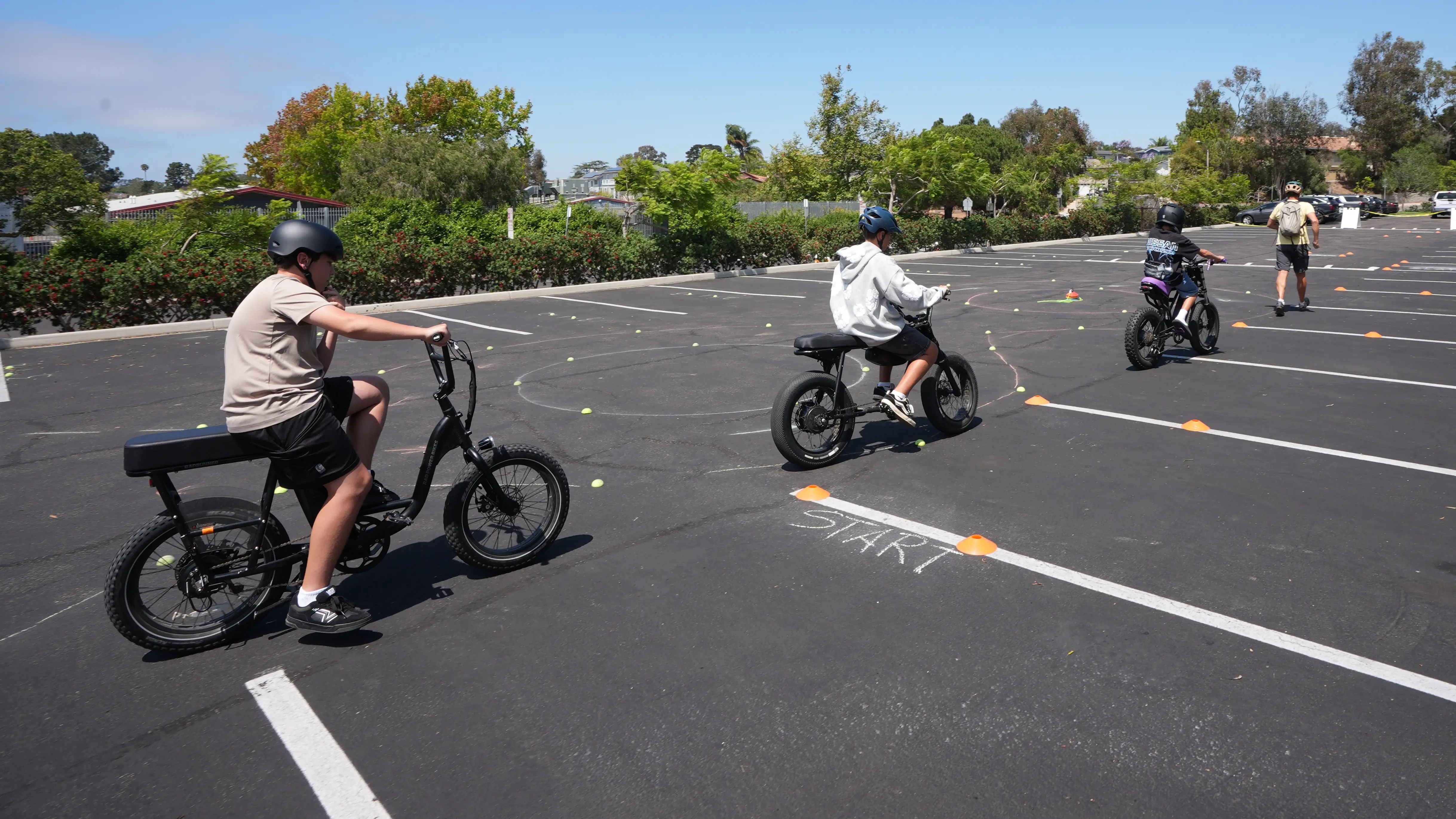
As e-bikes and e-scooters become more popular among children and teenagers, AAA is urging families to make helmet use part of every ride.
A recent AAA survey found that 66% of Florida adults have seen children riding e-bikes or e-scooters without helmets. Nearly six in 10 respondents said not enough riders wear helmets, while 83% supported helmet requirements for e-bike and e-scooter riders.
Recommended Videos
The warning comes as health care providers report a sharp increase in injuries involving young riders. According to a recent medical study cited by AAA, injuries involving e-bikes and e-scooters among children and adolescents increased 7.5-fold between 2023 and 2026.
The study examined more than 12,000 pediatric emergency department visits. More than one-third of injured patients suffered head or neck injuries, while nearly 7% experienced traumatic brain injuries.
“Many parents see e-bikes and e-scooters as just another version of a bicycle, but some of these devices can reach much higher speeds,” said Mark Jenkins, a spokesman for AAA – The Auto Club Group. “With higher speeds come greater risks.”
The American College of Surgeons says head injuries are the most common injuries linked to e-bike crashes. The organization also reports that only about one-third of injured riders are believed to have been wearing helmets.
Not all helmets offer the same protection
AAA says families should choose a helmet based on the speed and capabilities of the device.
Common helmet standards include:
- CPSC-certified bicycle helmets: Generally designed for traditional bicycles and lower-speed devices traveling up to 20 mph.
- NTA 8776 helmets: Developed for higher-speed e-bikes and e-scooters, generally traveling up to 28 mph.
- DOT-certified motorcycle helmets: Designed for devices capable of speeds above 28 mph and often offering additional protection, including facial coverage.
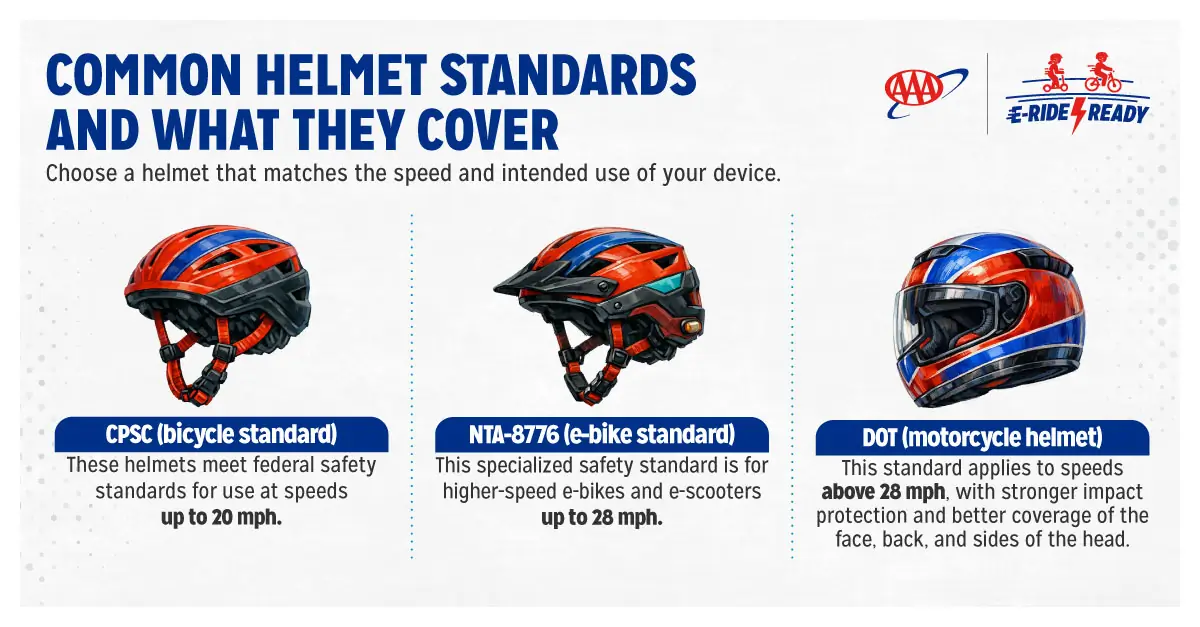
“The faster the device, the more important it becomes to choose a helmet designed for those speeds,” Jenkins said.
AAA also recommends that riders make sure their helmets fit properly, stay securely fastened and are replaced after a crash.
What Florida law says
In Florida, riders and passengers under 16 must wear a bicycle helmet that meets national safety standards.
The state does not set a minimum age for riding an e-bike, but cities and counties may adopt additional rules. Local governments may regulate where e-bikes and e-scooters can be used, including sidewalks, shared-use paths and beach areas.
AAA recommends that riders of all ages wear a properly fitted helmet, even when the law does not require it.
The organization also advises parents to make sure children:
- Wear a helmet on every ride, regardless of distance
- Use a helmet certified for the device’s speed and capabilities
- Keep the helmet securely fastened
- Replace the helmet after any crash
AAA’s Consumer Pulse survey was conducted online among 400 Florida residents from April 17 through April 26, 2026. The survey has a maximum margin of error of 4.9 percentage points, with responses weighted by age and gender.
