

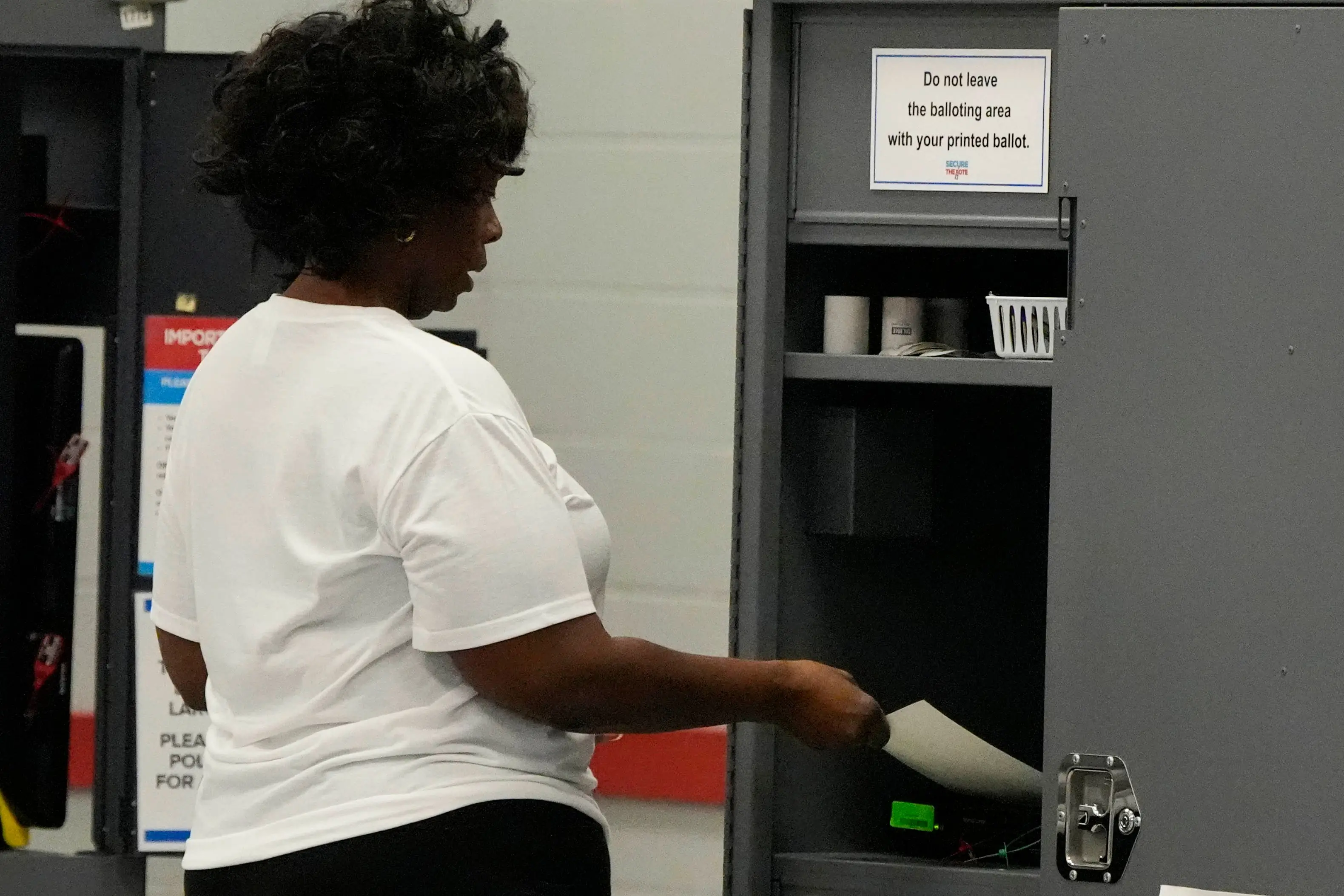
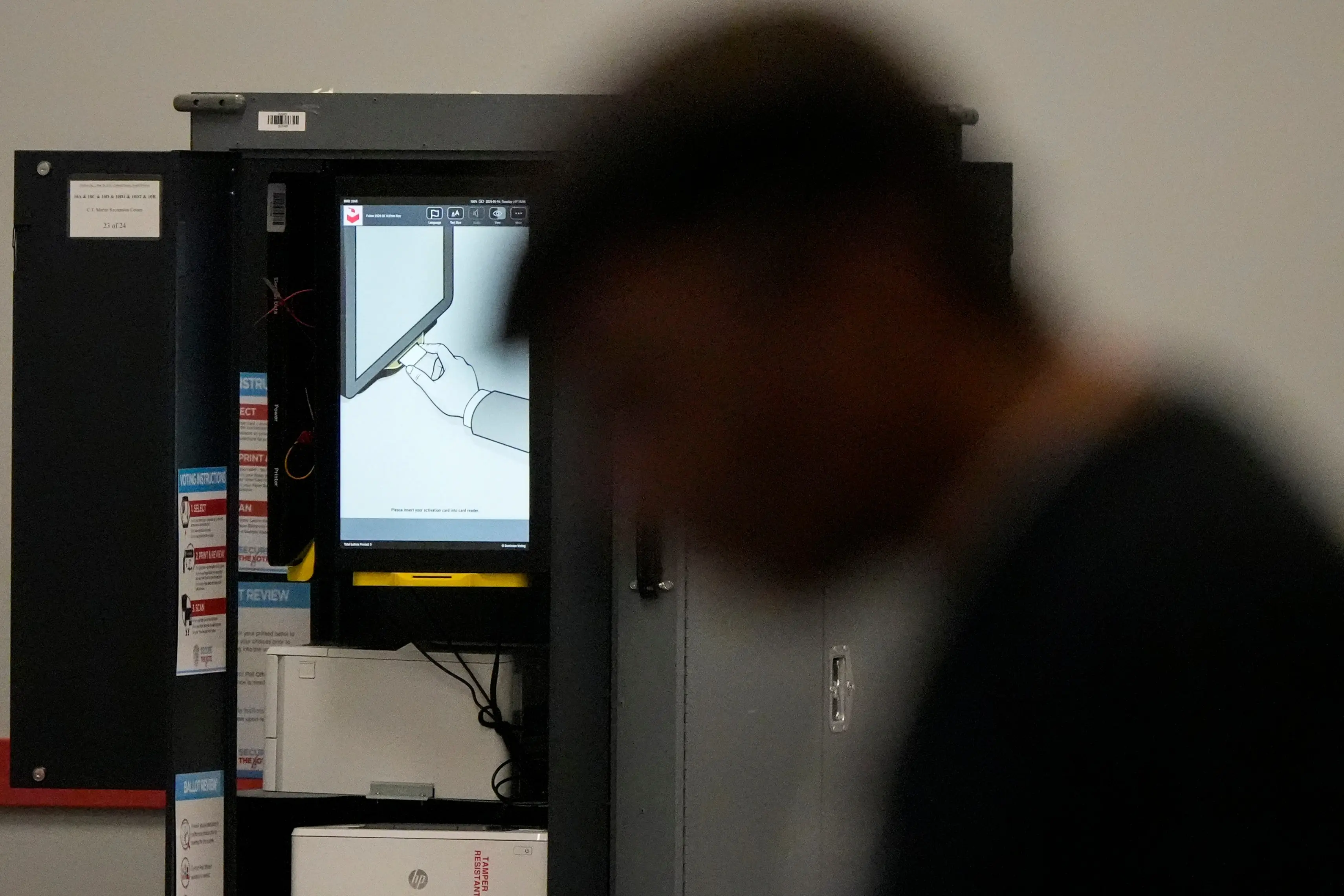
ATLANTA – Georgia will stick with an embattled vote-counting method that relies on a QR code for this year’s midterm elections after lawmakers passed legislation Tuesday that put off making changes until 2028.
The votes in the state House and Senate came after lawmakers limited a provision that requires a hand recount of ballots in certain races. Leaders in the Republican-controlled Legislature said their plan to delay action on the vote-counting equipment had the support of the governor, Republican Brian Kemp.
Recommended Videos
Kemp had called lawmakers into a special session in part to address a July 1 deadline that was set to ban the QR codes used for the official vote count. Legislators passed a law two years ago that set that deadline, but then failed to find a replacement for tabulating votes.
Some voting rights activists had urged lawmakers to delay any changes to the QR code system, warning that there wasn't enough time before the midterm elections to ensure they didn't cause confusion at polling sites. Georgia is a political swing state where voters will decide nationally prominent races for U.S. Senate and governor in the fall.
State lawmakers last week appeared to have reached a deal on a bill to postpone the deadline for banning the QR code tabulation, but Senate Republicans over the weekend inserted an amendment that required a full hand recount of the top two races on the ballot. That change drew strong opposition from Democrats.
The revised bill that passed Tuesday would limit hand recounts to eight races for statewide office, including governor, lieutenant governor, attorney general and secretary of state. But the hand counts would take place only for the top two contests on a ballot and only if the margin of victory is within a half percentage point. U.S. Senate and House races would not be subject to the hand counts.
To qualify, the race would have to appear as the first or second contest on a ballot.
Democrats objected to any hand recount provision. Research has shown that hand-counting is more prone to error, costlier and likely to delay results. Yet it has gained traction with Republican lawmakers in some states as President Donald Trump repeats false claims about a stolen 2020 election.
Georgia already has established election procedures that include audits and provisions for recounts in certain circumstances, Democratic state Rep. Debra Bazemore said.
“The question before us is not whether we support election integrity. Of course we do,” she said. “The question is whether the bill actually improves election integrity or whether it creates a new opportunity to cast doubt on legitimate election results. I believe it does the latter.”
Rep. Victor Anderson, a Republican who helped lead a House study committee on elections that held public hearings around the state last year, said the bill is the “culmination of a lot of work.”
He cautioned that if no bill is passed to address the QR code deadline, all votes may have to be hand counted in the coming midterm election.
“This bill is not the ultimate solution,” he said. “This bill solves an immediate conflict we have and lays out a path to achieve the most election integrity, the most accuracy, the most transparency that we can have going forward when we implement the next uniform voting system in Georgia.”
The state's current system uses a QR code printed on ballots to tally the votes. It has drawn the ire of Trump, who claimed without evidence that voting machines in Georgia deleted or switched votes in the 2020 election. Trump narrowly lost the state to Democrat Joe Biden that year.
Georgia voting machines have been the subject of conspiracy theories, which manufacturer Dominion Voting Systems fought vigorously in court. But election integrity advocates also have raised concerns about the machines, arguing that they are vulnerable to hacking and that voters cannot be sure their selections are accurately reflected because people can’t read QR codes.
Dominion was bought by another company last year and is now known as Liberty Vote.