


JACKSONVILLE, Fla. – You might have noticed that the eastern Pacific Ocean is very active right now with tropical activity. In fact, the basin has already seen two named storms (Amanda and Boris) and there’s another tropical depression that has a good chance of becoming the third named system of the season (Cristina). The Atlantic basin has a different set of names vs the eastern Pacific.
It’s important to know the eastern Pacific hurricane season starts before the Atlantic hurricane season. The eastern Pacific hurricane season runs from May 15 to Nov. 30, while the Atlantic hurricane season runs from June 1 to Nov. 30.

According to the National Oceanic and Atmospheric Administration (NOAA), based on a 30-year climate period from 1991 to 2020, the first named storm typically forms in early to mid-June, the first hurricane tends to form in late June, and the first major hurricane forms in mid-July in the eastern Pacific Ocean.

The average date when the season reaches two named systems is June 24, so tropical development is running earlier than average this year.
The average date where the season reaches three named systems is July 6. If another named system develops, the basin would be running a month or so ahead of schedule.
Does the activity in the eastern Pacific Ocean indicate that the Atlantic will be busy? It turns out not so much, so let’s dive in and see why the eastern Pacific is active and why the Atlantic is not seeing any development at the current time.

Remember, we are forecast to be in a strong El Niño over the coming months. El Niño is a phase where warmer-than-average sea surface temperatures are present in the central and eastern equatorial Pacific.
This is currently occurring off the coast of Central America. This is one factor we look at to see if activity in a specific basin will be above or below average.
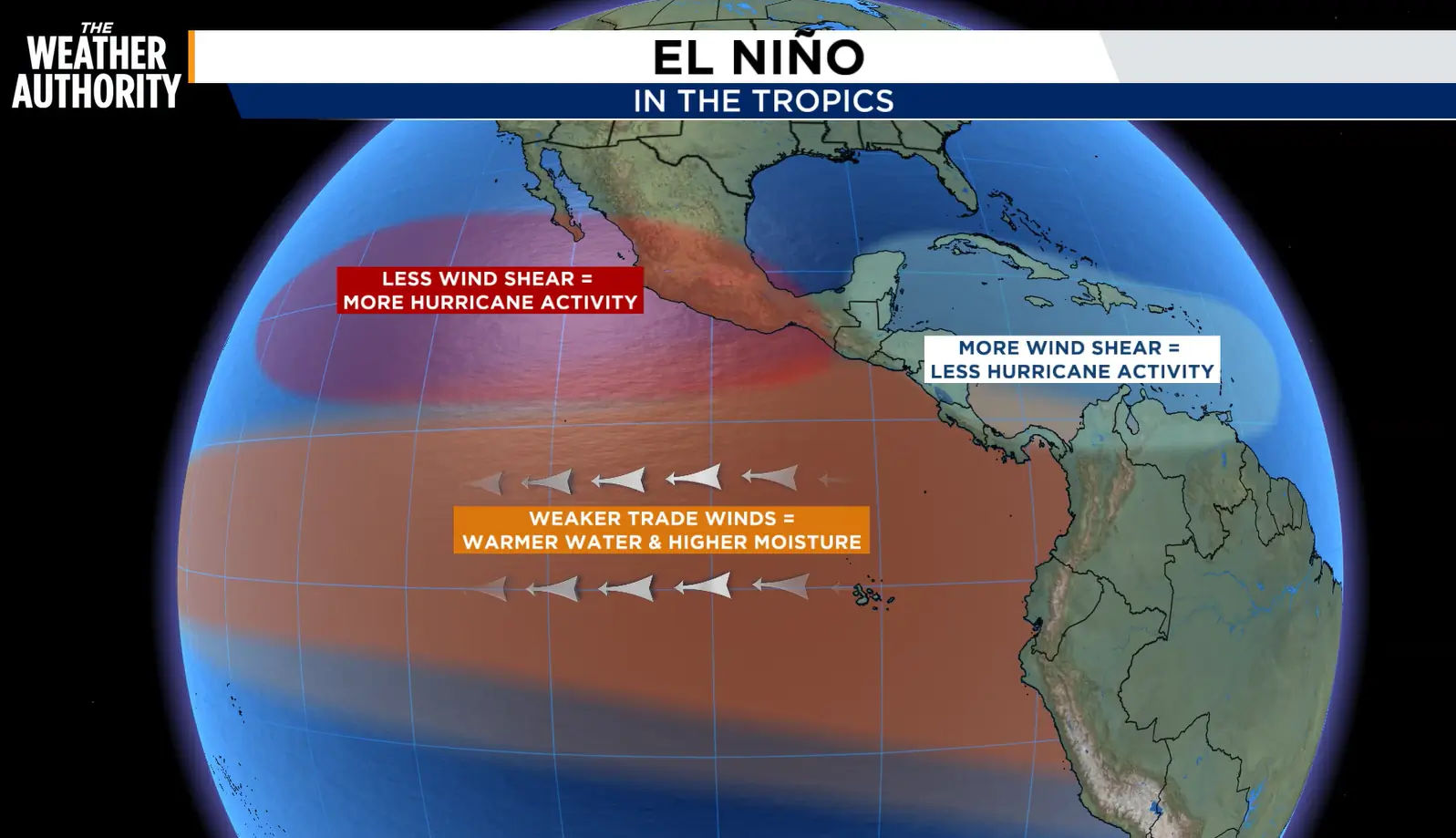
About tropical activity in an El Niño pattern, the trade winds are weaker. This leads to less wind shear in the Pacific, which typically enhances development.
In the Atlantic, there’s more wind shear, which typically suppresses development.

It’s also important to note that other factors can enhance or suppress development and the ENSO cycle is only one part. Saharan Dust can directly impact development.
Notice over the Atlantic the dust concentration is higher. This brings drier air into the atmosphere, which tends to suppress development.
While activity is higher in the Pacific, other factors are influencing the Atlantic as described above.
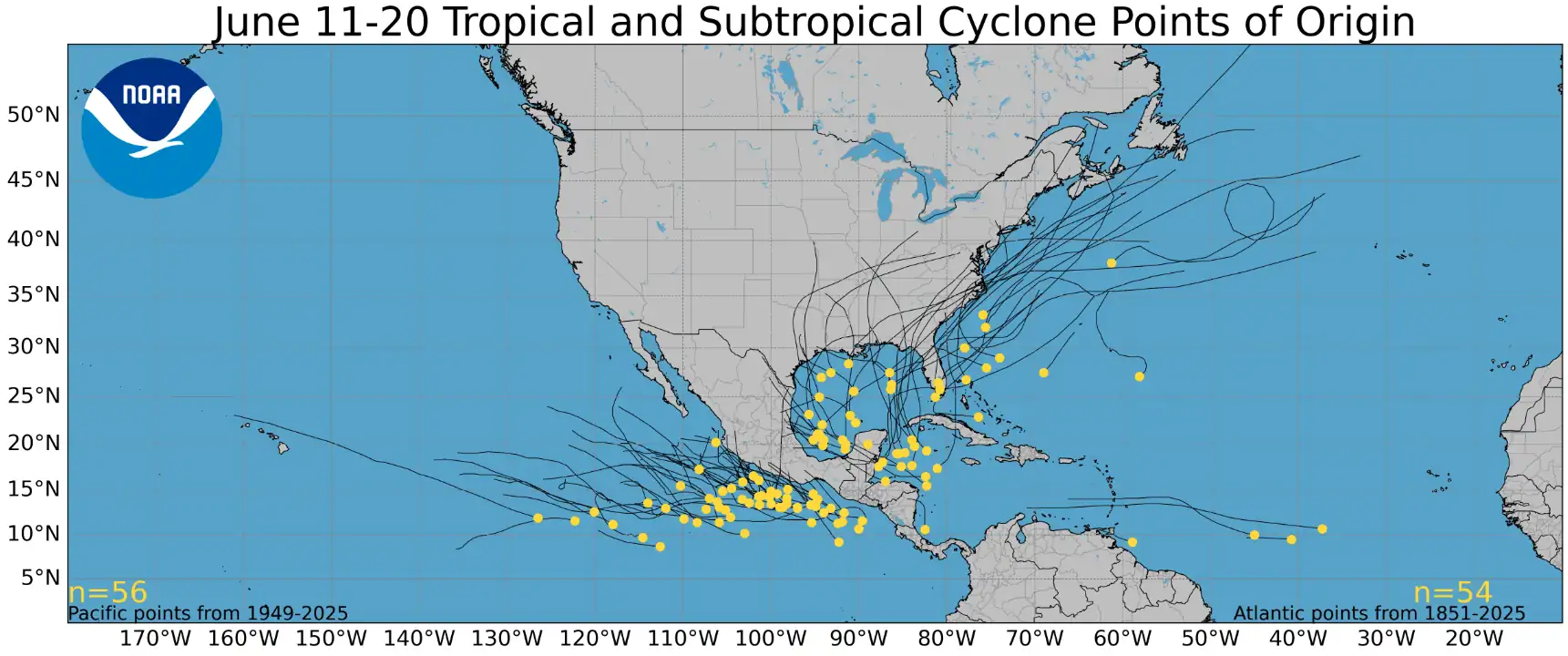
Regarding development and where we look at this time of year, these storms are developing in the region that we typically see development in the eastern Pacific.
Above you can see tropical and subtropical points of origin for the middle of June. Development typically occurs in the Gulf and, less frequently the Atlantic.
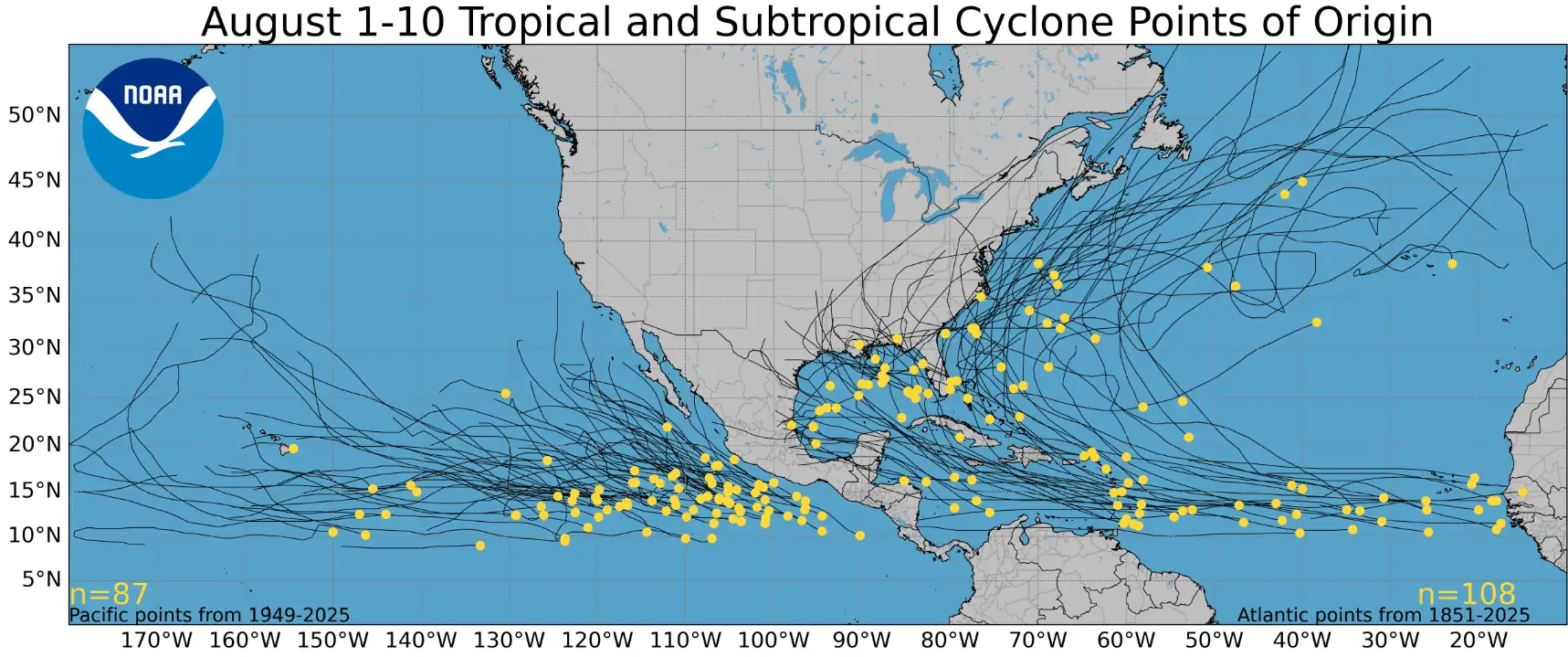
Over the next few months, we start to look further west in the Atlantic for development, which can be shown on the tropical and subtropical points of origin in early August.
We will continue to monitor and will be with you every step of the way. For more information on how you can plan for a system, click here. This will take you to our hurricane plan special along with important information you need to know before, during and after the storm.
