

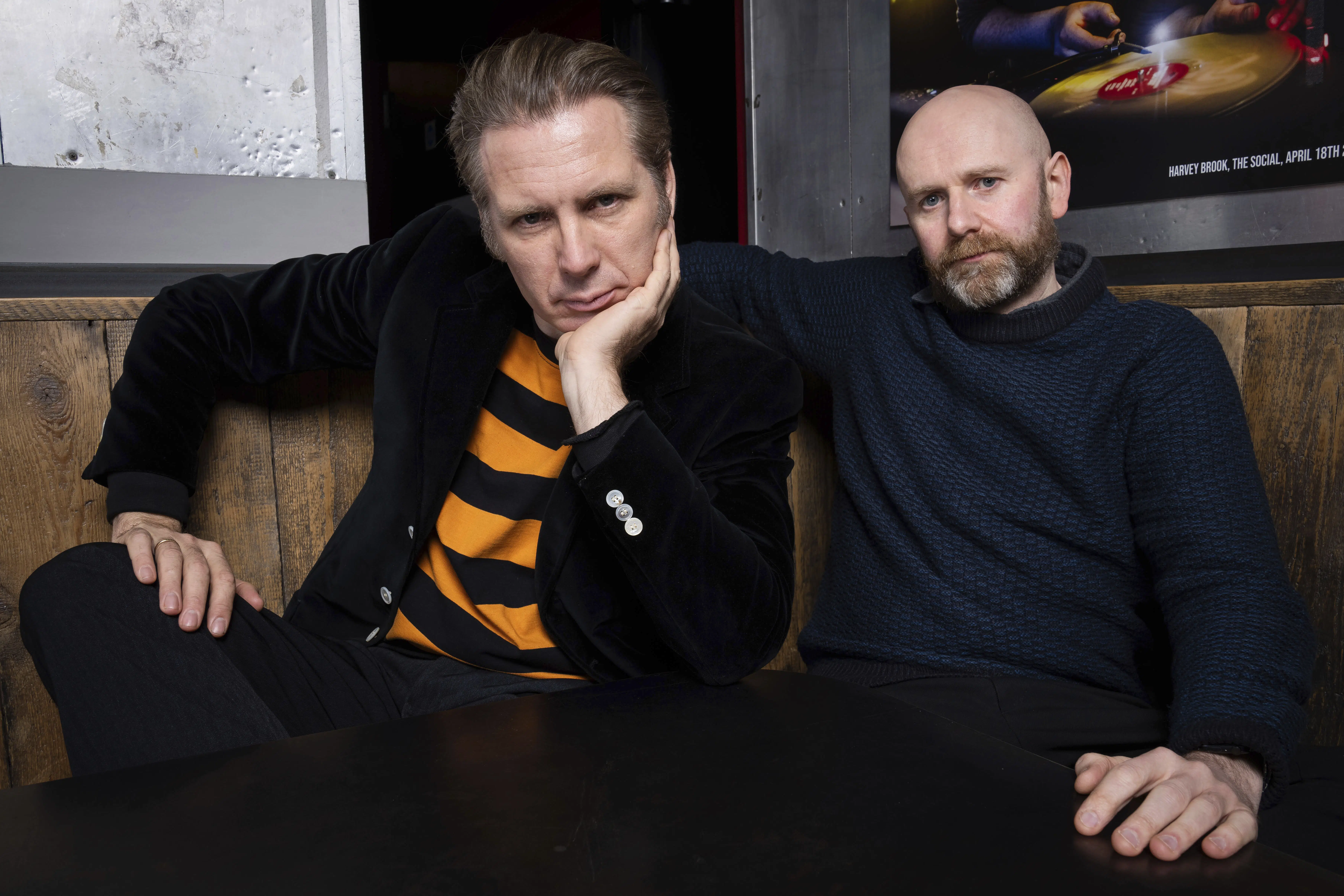
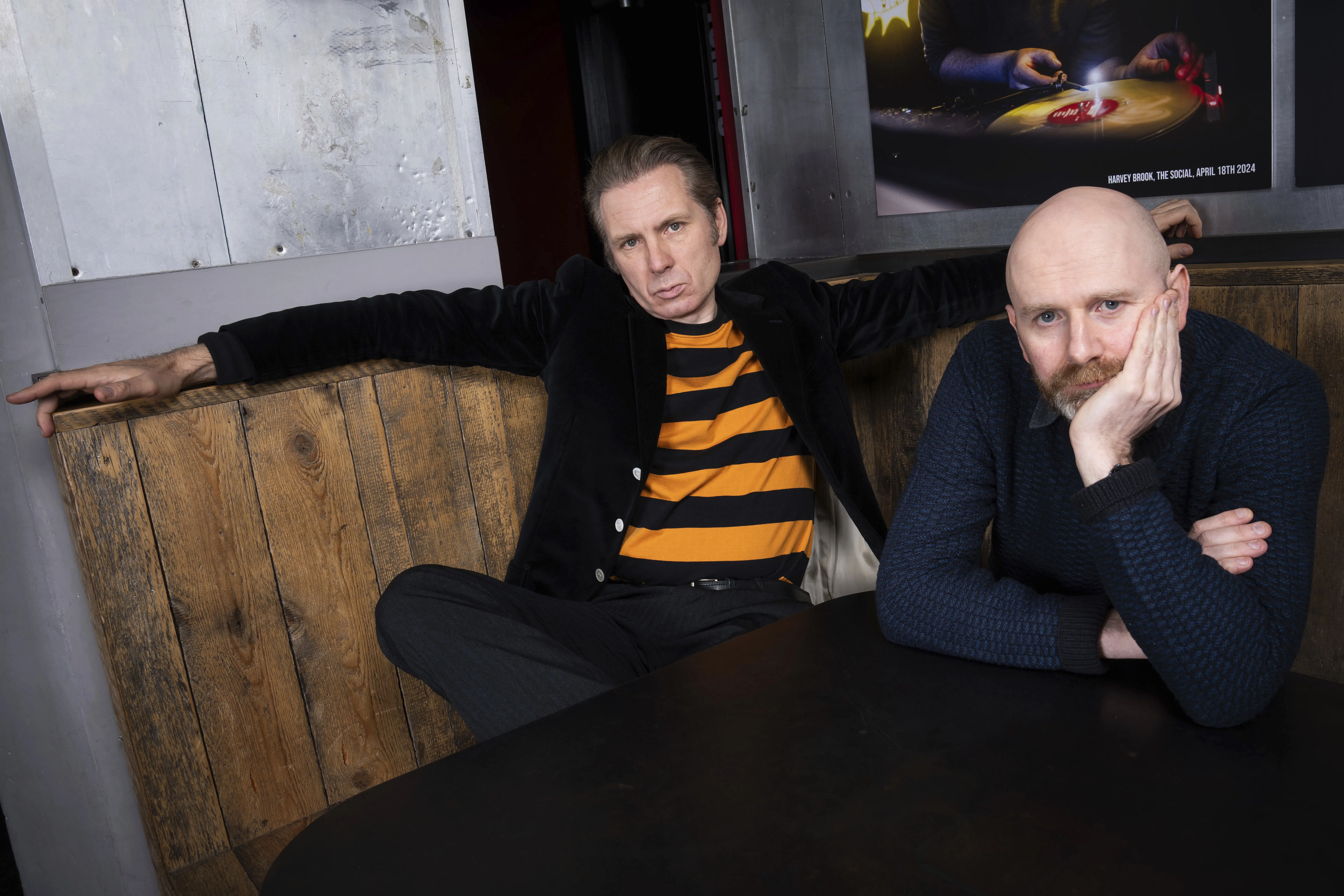

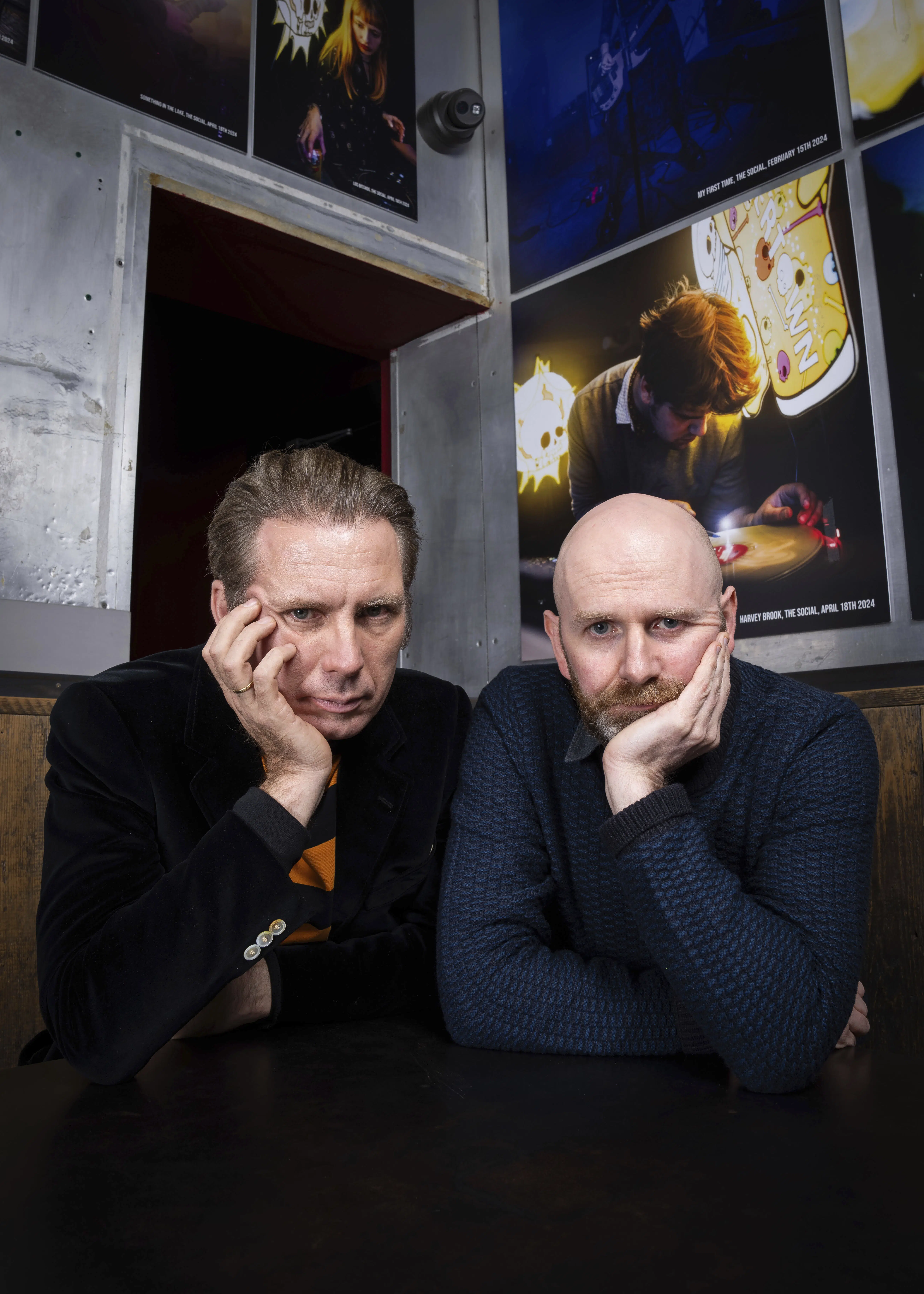
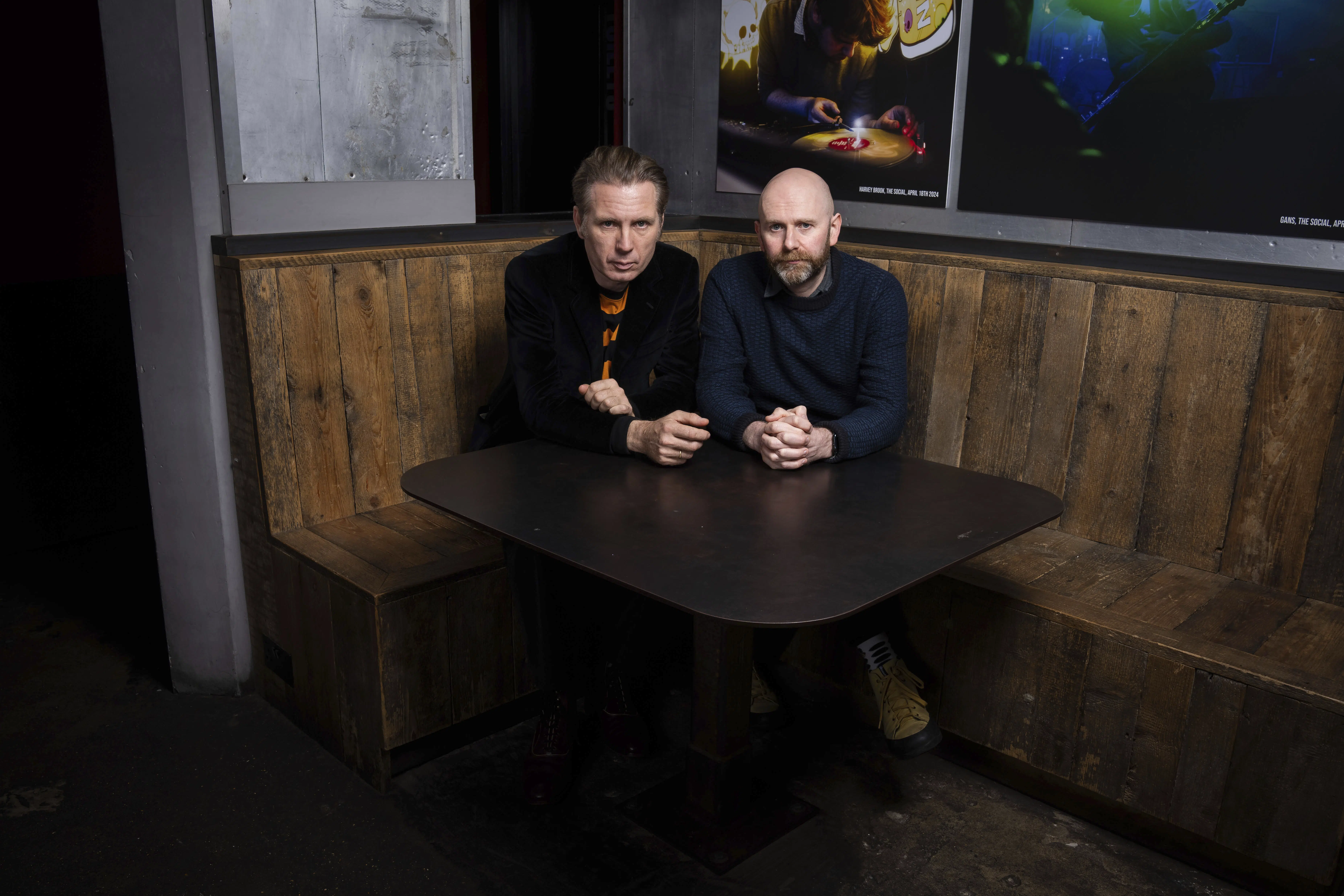

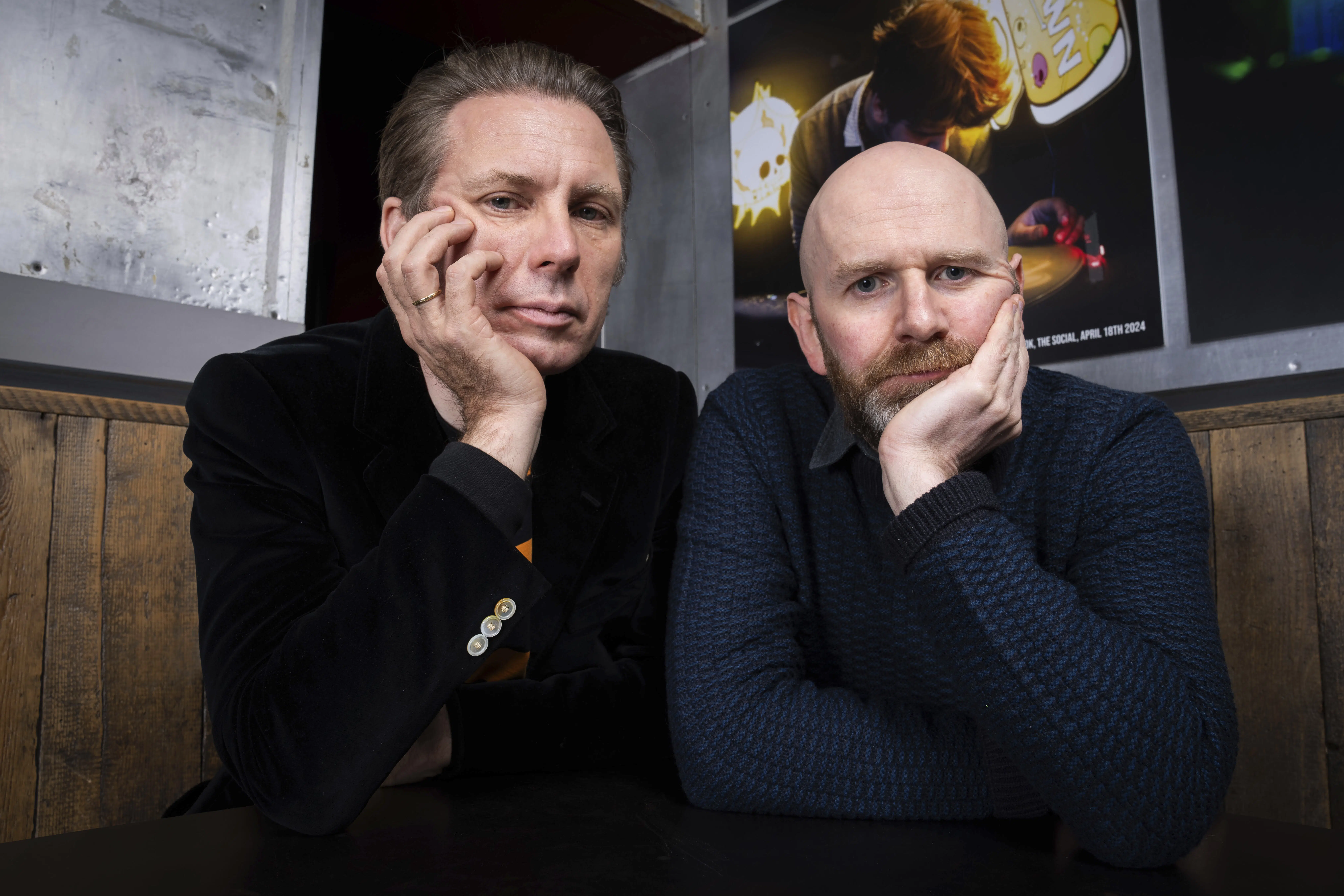
LONDON – Two decades ago, the Scottish rock band Franz Ferdinand sent a jolt across the music world. They waltzed in stripped-shirts and quickly became global icons for their deliriously hooky songs, hitting a critical mass in the chant-along singles “Take Me Out” and “Do You Want To.” A lot has changed in that time, but the band never wavered in their dedication to 2000s indie ebullience. Over the last few years there's been a bit of an indie music resurgence, but for Franz Ferdinand, it never went away.
On Friday, they will release "The Human Fear,'' their sixth studio album and the first in seven years, making the end of the longest break between full lengths in their career.
Recommended Videos
Frontman Alex Kapranos says the album tackles relationships forming and breaking down. “The title is a clue to the scene,” he teases. “But it wasn’t written to the theme, at least not consciously.”
In an interview with The Associated Press in London, Kapranos and Franz Ferdinand bassist Bob Hardy discussed about “The Human Fear,” the resurgence of indie music and the band's love for Chappell Roan and Charli XCX. Responses have been edited for length and clarity.
AP: What is the story behind “The Human Fear”?
KAPRANOS: The last song that was written, the last lyrics that were written was (for) the song “Hooked.” It starts off with the line, “I’ve got the fear / I’ve got the human fear.” And I realize that so many of the songs had an underlying theme of fear to them. But not necessarily succumbing to fear, but more like overcoming fear.
“The Doctor” is about the fear of leaving an institution, and “Bar Lonely” is the fear of leaving a relationship. “Night or Day” is the fear of committing to a relationship. But fear is fascinating because fear is universal. We all experience fear. We all experience the same fears. But how we respond to it is individual. And that’s how we find who we are, our personalities. And overcoming fear feels good. That’s why we watch horror films or ride rollercoasters — because you overcome fear and then feel very alive for having done so.
AP: The latest single, “Audacious,” deals with fear as well.
KAPRANOS: The song starts off addressing that feeling that we all have sometimes, which is, you know, you feel that your life is collapsing around about you for one reason or another. It could be a relationship that is disintegrating. Often, it'll go that things tend to happen to you (all) at once. The relationship starts going south as well as your professional life. And then you realize that the washing machine leaked and your basement’s flooded and just all that kind of annoying stuff. Your phone gets nicked or whatever. And it can be overwhelming. And you just, you have this sense of fear that, "Gosh, everything’s collapsing."
I guess I was feeling a little bit like that when I was writing the song for one reason or another. And I thought, “What am I going to do?” ... I’m just going to do something astonishingly audacious. I’m going to go into it with an audacious attitude and get through it that sort of way. And don't blame anybody else for it as well. Like, own the responsibility of overcoming the fear myself.
AP: Has your writing process changed?
KAPRANOS: We’re not one of these kinds of bands that will sit down and say, “Right, we’ve got two months to write an album. ” For me, you’re always writing, you’re always coming up with ideas. And so, on this album, there’s ideas that were written in the studio literally the day before it was sent off to be mastered. And there’s also ideas … I think the oldest idea is the bassline (of) one of the songs, which is from 1995.
I think the way my brain works is like if you imagine going into the office of a university’s eccentric professor that’s scattered with bits of paper. It's all kind of like catastrophic, organizational hell, but they know exactly where everything is. That’s what my brain is like with bits of ideas and bits of songs and stuff like that. I know where they are, and when I need to use them, they’ll come out.
HARDY: And the show has become the reward for making records, to me. It all kind of focuses playing it live in front of an audience and seeing people react to it in the moment. When you release a record, you don’t see people listen to it at home. You know, the way you kind of get the reaction is these live shows.
AP: What do you think about the current resurgence of indie?
HARDY: It's never gone away.
KAPRANOS: There was a period in the late-2000s where there was point of saturation where, like, you turned on any mainstream radio show and you heard nothing but indie bands. And when it becomes that saturated, maybe the quality control goes down slightly. And then when that happens, there’s always a reaction to it. And I think over the last decade, there’s been a bit of, “Right, okay, so we’re going to listen to like pure pop instead.” And of course, there’s some brilliant stuff like Charli XCX. Amazing. Chappell Roan (is) incredible. But there’s a lot of stuff that’s maybe not quite premier tier as well. And I think there's been maybe a little bit of a reaction to that.
I think from our perspective, just, yeah, make the thing that you love and then you’re not really going to go wrong.