


KANAIO, Hawaii – Fear. Anxiety. Anger. Depression. Overwhelmed.
Janice Dapitan began her second counseling session by writing those words on a whiteboard, reflecting what she felt in that moment. The day fire destroyed her hometown of Lahaina — and the struggles that have followed for nearly a year — still haunted her.
Recommended Videos
The fire killed her uncle. It burned the homes of seven family members. Her daughter narrowly escaped the blaze with her two children, but lost her house and moved to Las Vegas. The house Dapitan shares with her husband, Kalani, survived, but now it overlooks the burn zone. The view is a painful, constant reminder that the life they’d known is gone.
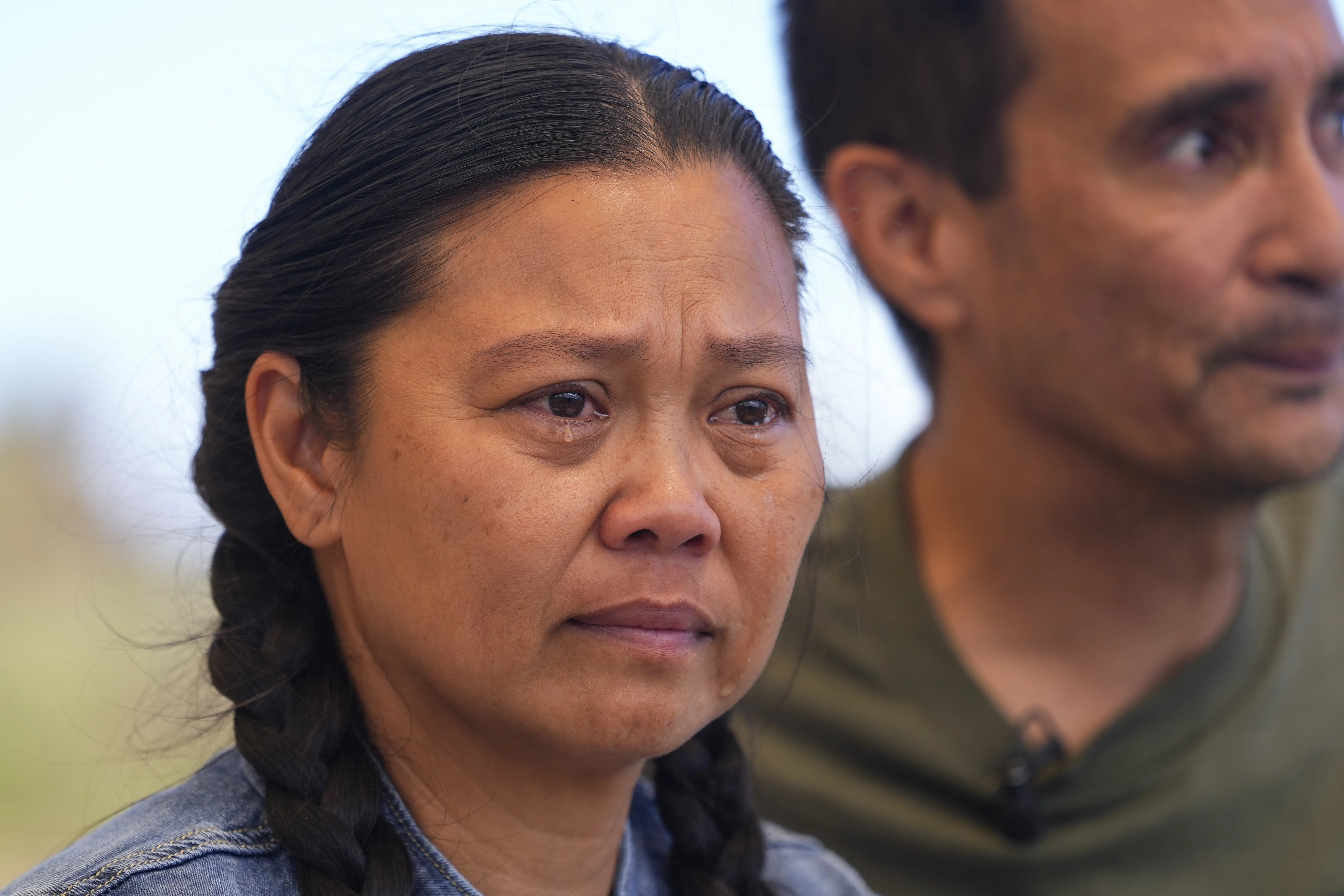
“There are so many triggers,” she said on a blustery July day. Her long black braids fell over a tank top with the word “Lahaina” printed in gold. “We can be okay today, and tomorrow it could be different. Everything is uncertain. Every day is a different challenge. We want to stay joyful, but it’s a process.”
One year after the Maui fires, thousands of residents share Dapitan’s struggle. They grieve the losses of loved ones and generational homes. They are haunted by their traumatic escapes and even by the guilt of surviving. They’ve endured months of instability — switching hotel rooms, schools and jobs. An estimated 1,500 families have left Maui, forced to start over thousands of miles from home.
But lately, Dapitan has enjoyed some relief, thanks to an equine-assisted therapy program at the Spirit Horse Ranch in Maui’s rural upcountry, an hour’s drive from Lahaina.
“The connection with the horses is different than connecting with machines or humans,” said Dapitan. “It’s almost like instant healing.”
After large-scale disasters, restoring a community’s mental wellness is as important as rebuilding infrastructure, experts say. And just as constructing an entire town can take years, so can healing its residents.
“We can be so focused on the bricks-and-mortar rebuild — because that’s challenging enough as it is — that we don’t create space for that healing,” said Jolie Wills, a cognitive scientist who led the mental health response for the Red Cross after the 2010 Christchurch earthquake in New Zealand.
While some survivors need professional support to overcome their trauma, a lot of recovery can happen outside of a clinic’s walls. Maui residents have leaned on programs that help them reconnect — to themselves, their community, land and culture.
Horses to process trauma
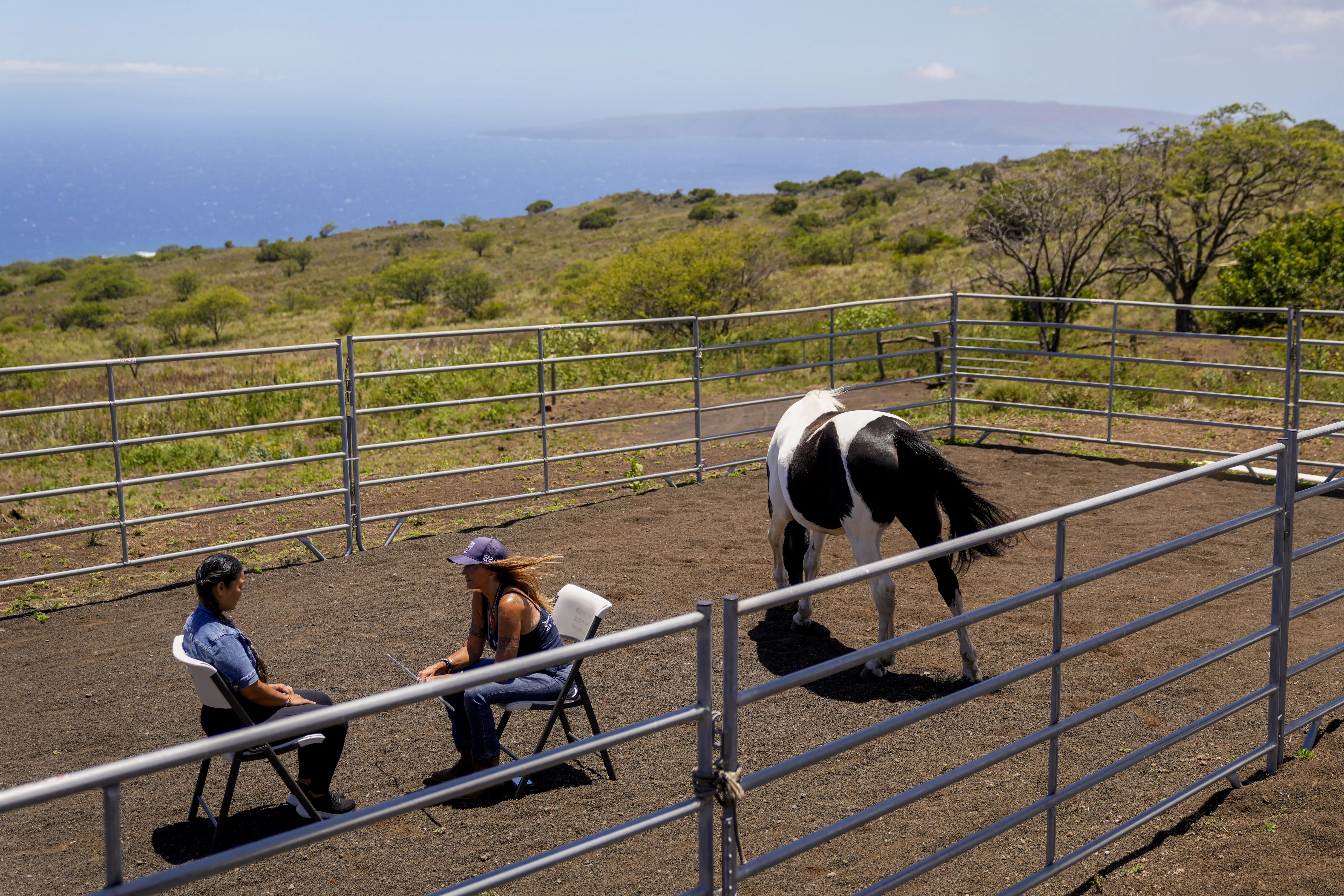
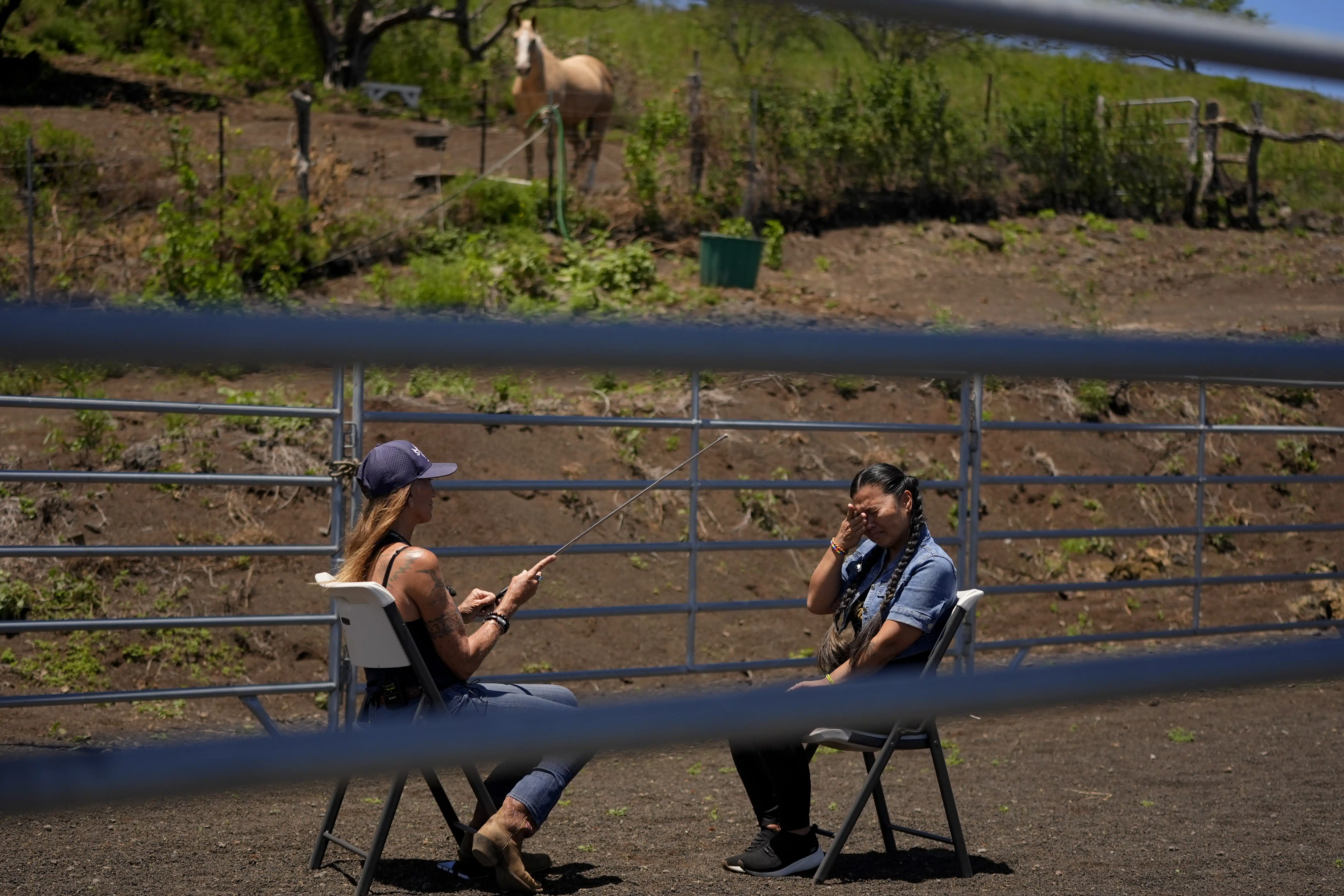
After writing down her words, Dapitan sat on a folding chair inside a horse corral. A few feet away, Maverick, a 22-year-old Tennessee Walker rolled in the dirt.
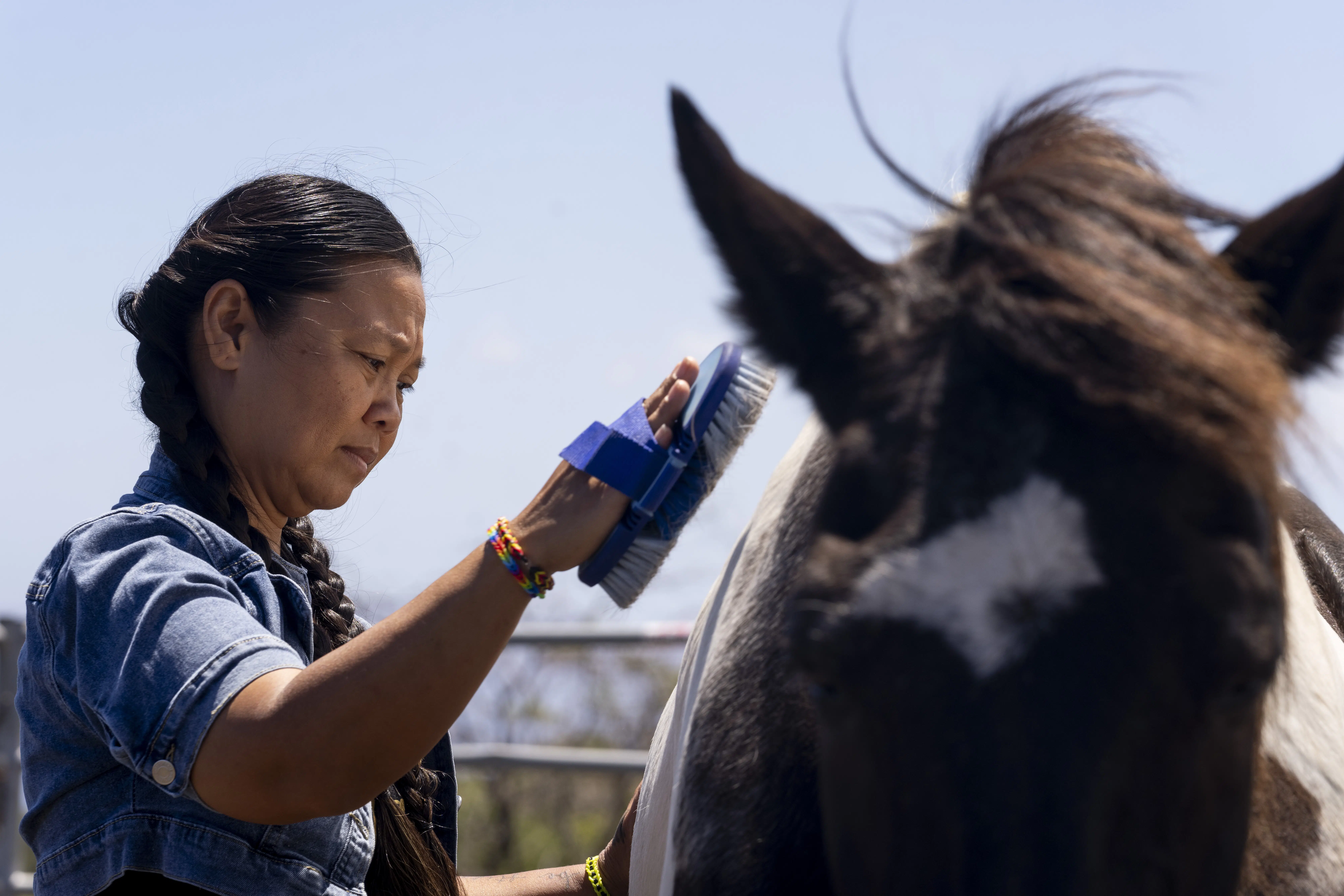
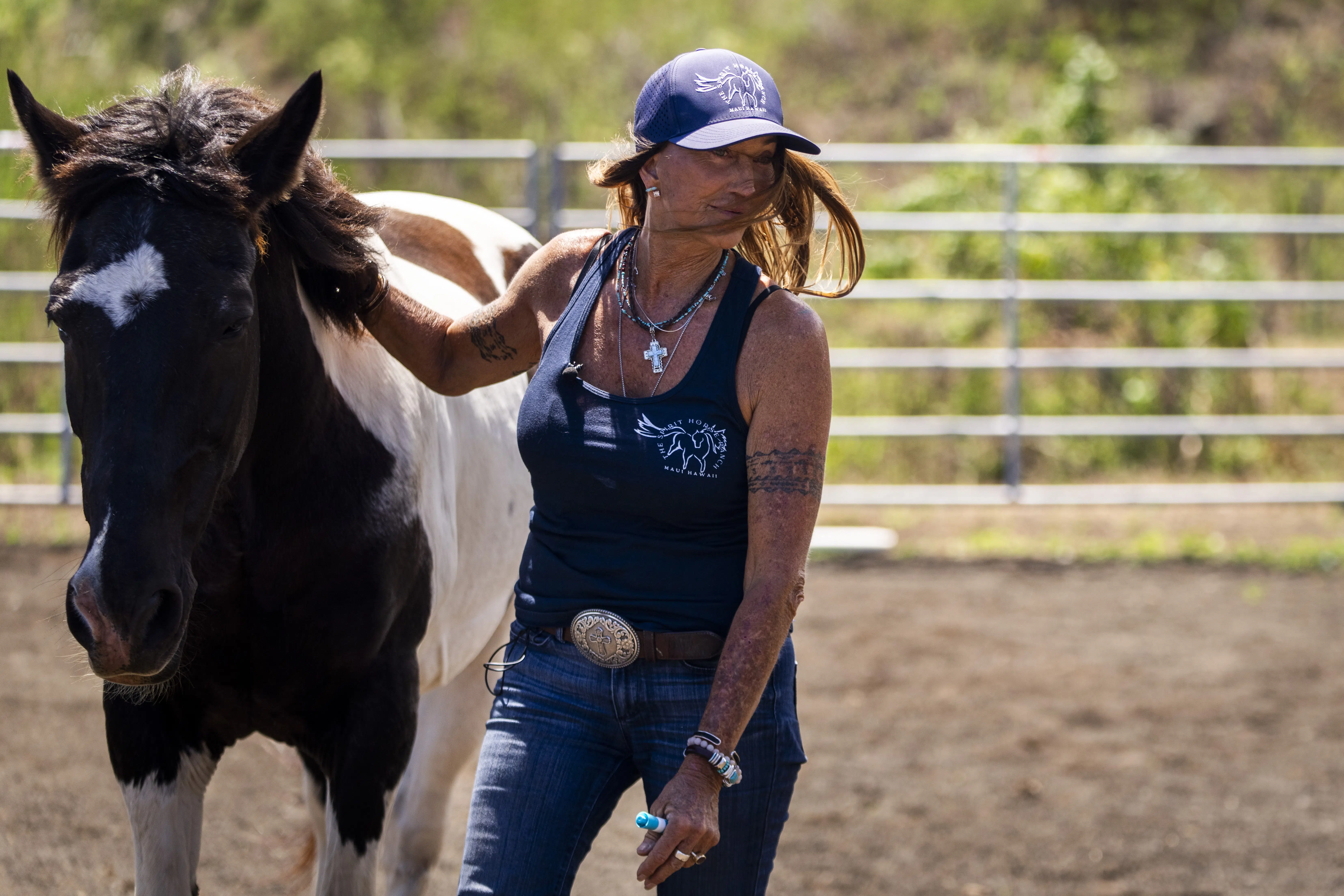
The program’s founder, Paige DePonte, sat in front of her and began a technique called brainspotting. She moved a small wand in front of Dapitan’s eyes to stimulate certain eye movements believed to help the brain process trauma. Later, Dapitan approached Maverick. She brushed his dark mane. After leading him once around the corral, she stopped, rested her arms over his back, and began to cry.
“He just lets you lean on him,” she said. “I can feel myself healing because somebody is at least letting me lean on them.”
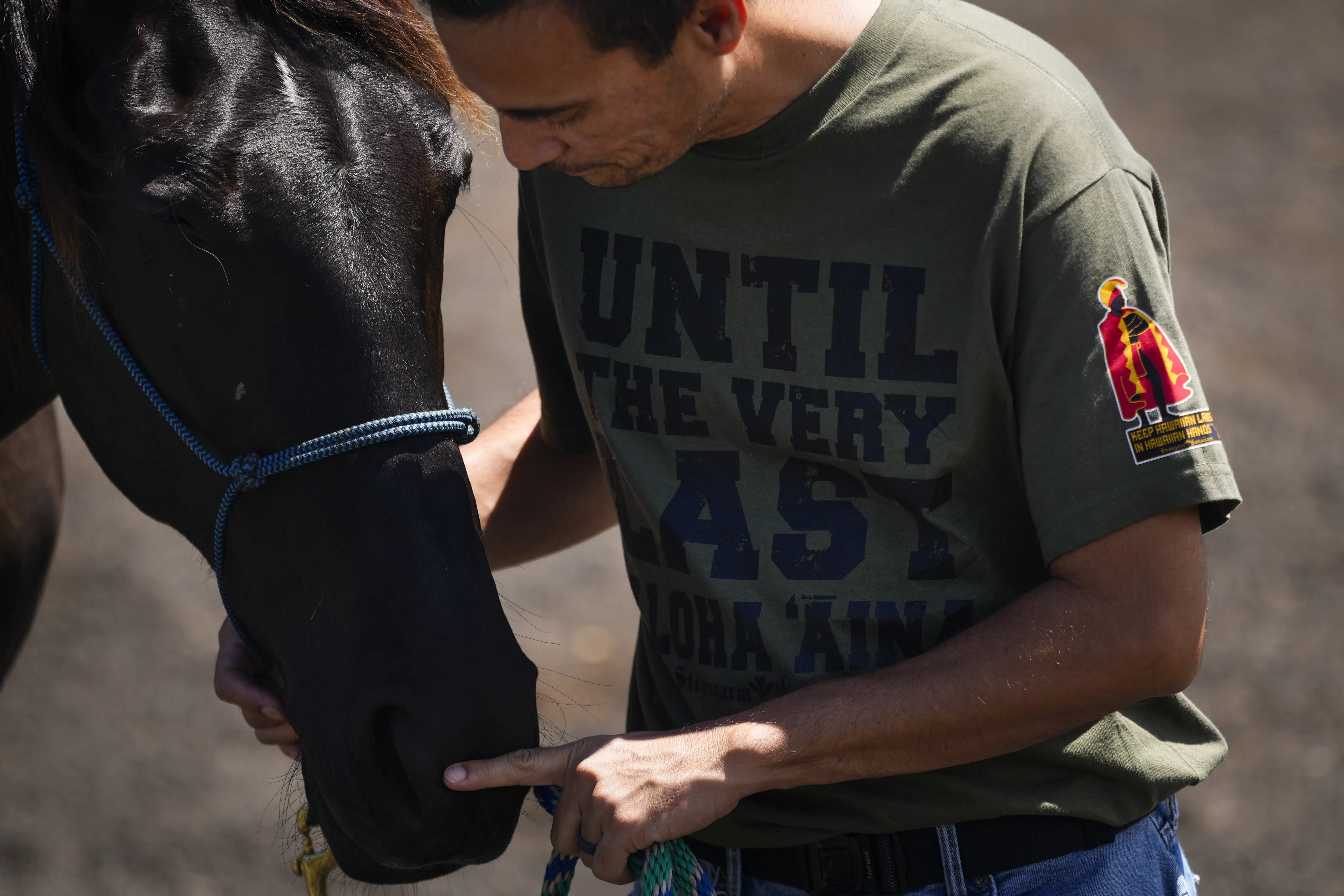
For her husband Kalani, the ranch’s quiet isolation, tucked on a hillside overlooking Maui’s south coast, gives him space to process what has happened. “Before we even met the horses, I was in tears,” he said. “The peacefulness really breaks your walls down.”
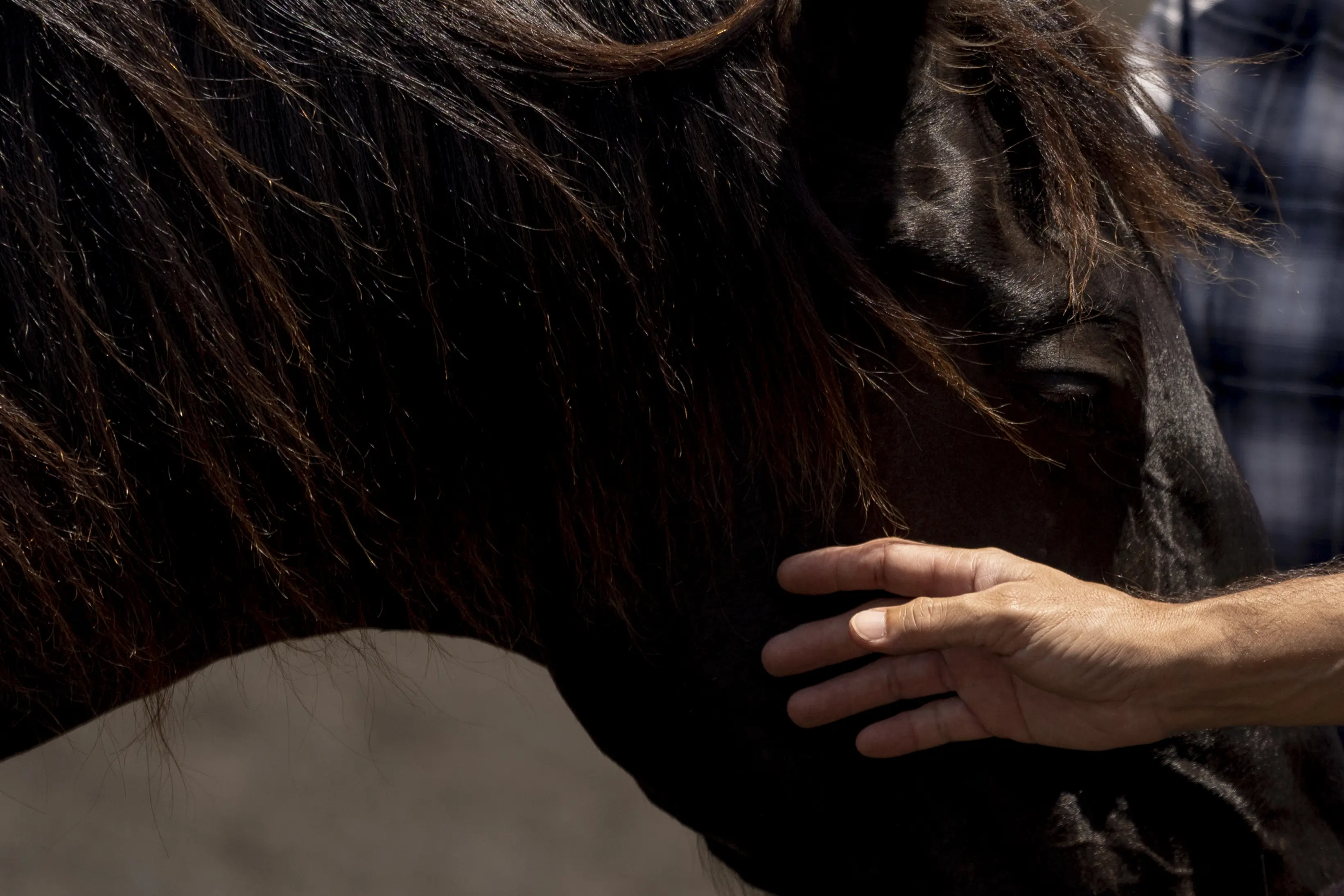
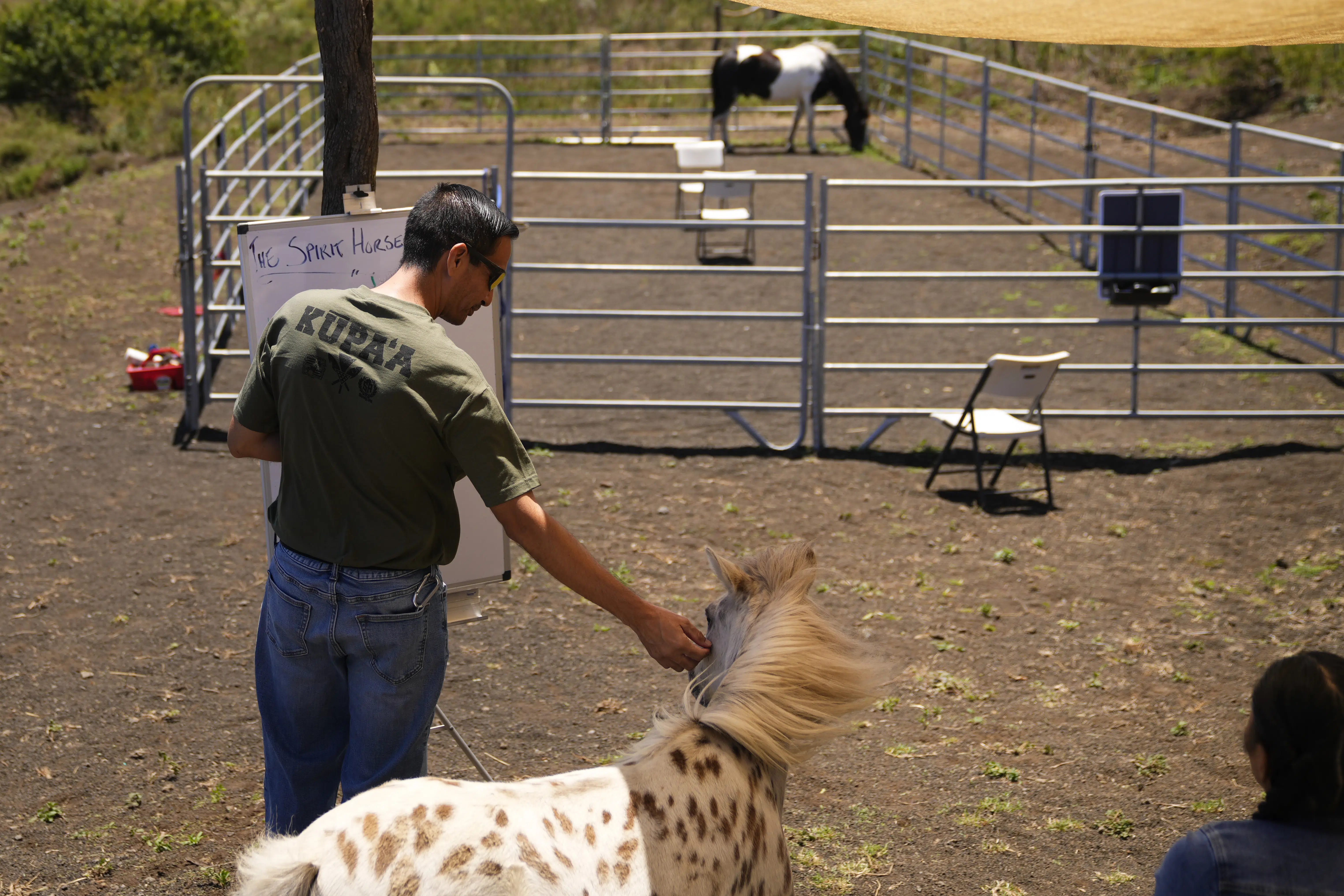
Equine-assisted therapy participants don’t typically ride horses, but the animals’ presence alone can soothe people as they face their trauma. They might brush, walk and even talk to the animals, or the horses might just be nearby as facilitators take them through other methods of counseling or psychotherapy.
“Horses are incredible healers,” said DePonte, who started the program on her family’s cattle ranch in 2021 after observing the transformational effect the animals had on her own trauma recovery. “They are in a place of coherence all the time, not thinking about tomorrow, not thinking about yesterday.”
The program, now supported by grants from the Hawaii Community Foundation, Maui United Way, and other private donors, has provided more than 1,300 sessions for impacted residents.
Dapitan had already begun therapy before the fire to recover from a previous trauma, but she said time at the ranch feels different. “I think I got the most out of the horses in two days versus the year that I’ve been having regular counseling.”
Healing through connection
Holistic programs like these have helped meet the overwhelming need for support services after the Aug. 8, 2023 fire that killed at least 102 people and displaced 12,000.
On top of the harrowing experiences of losing homes and loved ones, survivors are stressed and exhausted from the volatility of daily life — moving hotel rooms, changing schools, losing income.
“It’s been a pretty significant impact on people’s mental health,” said Tia Hartsock, director of Hawaii’s office of wellness and resilience. “Navigating bureaucratic systems while in a traumatic response has been very challenging.”
In a Hawaii Department of Health survey of affected families two months after the fire, almost three-quarters of respondents said at least one person in their household had felt nervous, anxious or depressed in the preceding two weeks. At the six-month anniversary, more than half of survivors and one-third of all Maui residents surveyed by the University of Hawaii reported feeling depressive symptoms.
That’s expected after a disaster of such scale, said Wills, calling it "very normal reactions to a very abnormal situation.”
Providers, nonprofits, philanthropic groups and the government collaborated to reduce barriers to mental health treatment, like paying for people’s therapy sessions and staffing shelters and FEMA events with mental health practitioners.
But they knew residents also needed other options. “Clinical support wasn’t necessarily going to be right for everyone,” said Justina Acevedo-Cross, senior program manager at the Hawaii Community Foundation.
Numerous public and private funders are supporting programs that re-engage residents with land and people, which Hartsock calls “unbelievably helpful in the healing.”
Several are rooted in Native Hawaiian healing practices. Cultural practitioners with the organization Hui Ho’omalu offer lomilomi, or Hawaiian massage. Those sessions typically lead into kukakuka, or deep conversation, with Native Hawaiians trained in mental health support.
Impacted families also maintain taro patches, restore native plants and take cultural classes on protected land stewarded by the organization Ka’ehu. Aviva Libitsky and her son Nakana, 7, volunteer there at least once a week, scooping invasive snails out of kalo pools and cleaning litter from the shoreline.
Libitsky felt anxious for months after fleeing the Lahaina fire and losing the home she’d lived in since 2010. Working on the land calms her. “It helps you channel that frenetic energy and put it toward something useful.”
She and Nakana recently learned how to weave bracelets from the leaves of hala trees at one of Ka’ehu’s cultural workshops. They've gone to Spirit Horse Ranch, too. “We just focus on new opportunities, creating new memories.”
A new wave of need
As Maui enters its second year of recovery, providers are preparing for a new wave of people to seek help.
The last families are moving out of hotels and into the interim housing meant to carry them over until Lahaina rebuilds. That sudden stillness can trigger bigger emotions, said Acevedo-Cross. “They’re able to feel a bit more.”
Many who weren’t directly affected by the fires are now experiencing its impacts, as rents skyrocket, tourism jobs disappear, and friends and family move away.
For some, healing won’t come until Lahaina is rebuilt and the community can return home.
“We don’t have a hometown anymore,” said Kalani Dapitan. He misses his friends and family, and most of all his daughter. He worries constantly about what will happen to Lahaina, especially as a Native Hawaiian. “We’re unsure of our future, how our cultural aspect is going to pan out.”
With so much still uncertain, time at Spirit Horse Ranch helps the Dapitans stay present.
At the end of her session, Janice returned to the whiteboard to write the words that summed up her feelings. “Relaxed,” she wrote, and looked up. “That’s all.”
_____________
Associated Press coverage of philanthropy and nonprofits receives support through the AP’s collaboration with The Conversation US, with funding from Lilly Endowment Inc. The AP is solely responsible for this content. For all of AP’s philanthropy coverage, visit https://apnews.com/hub/philanthropy.