

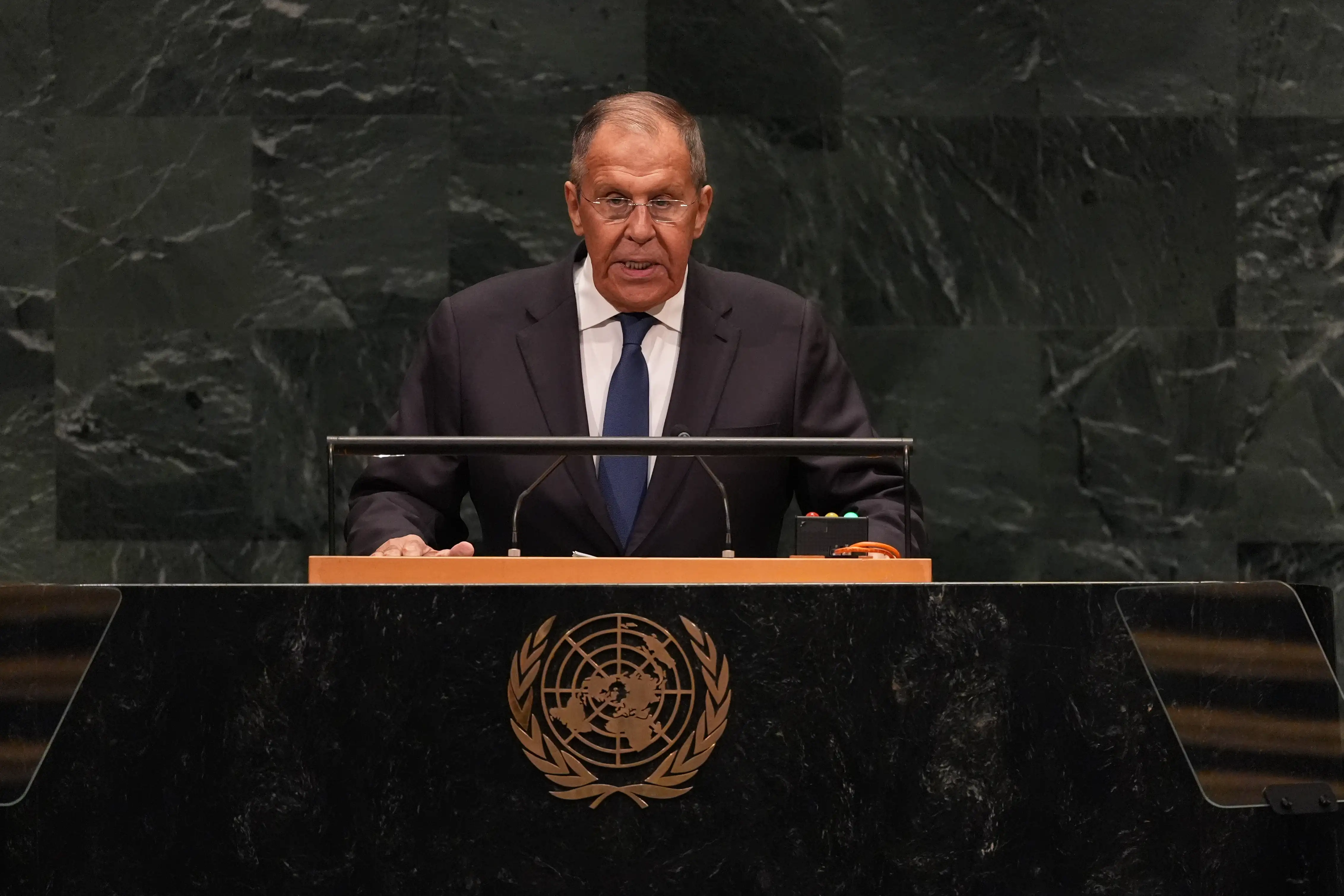
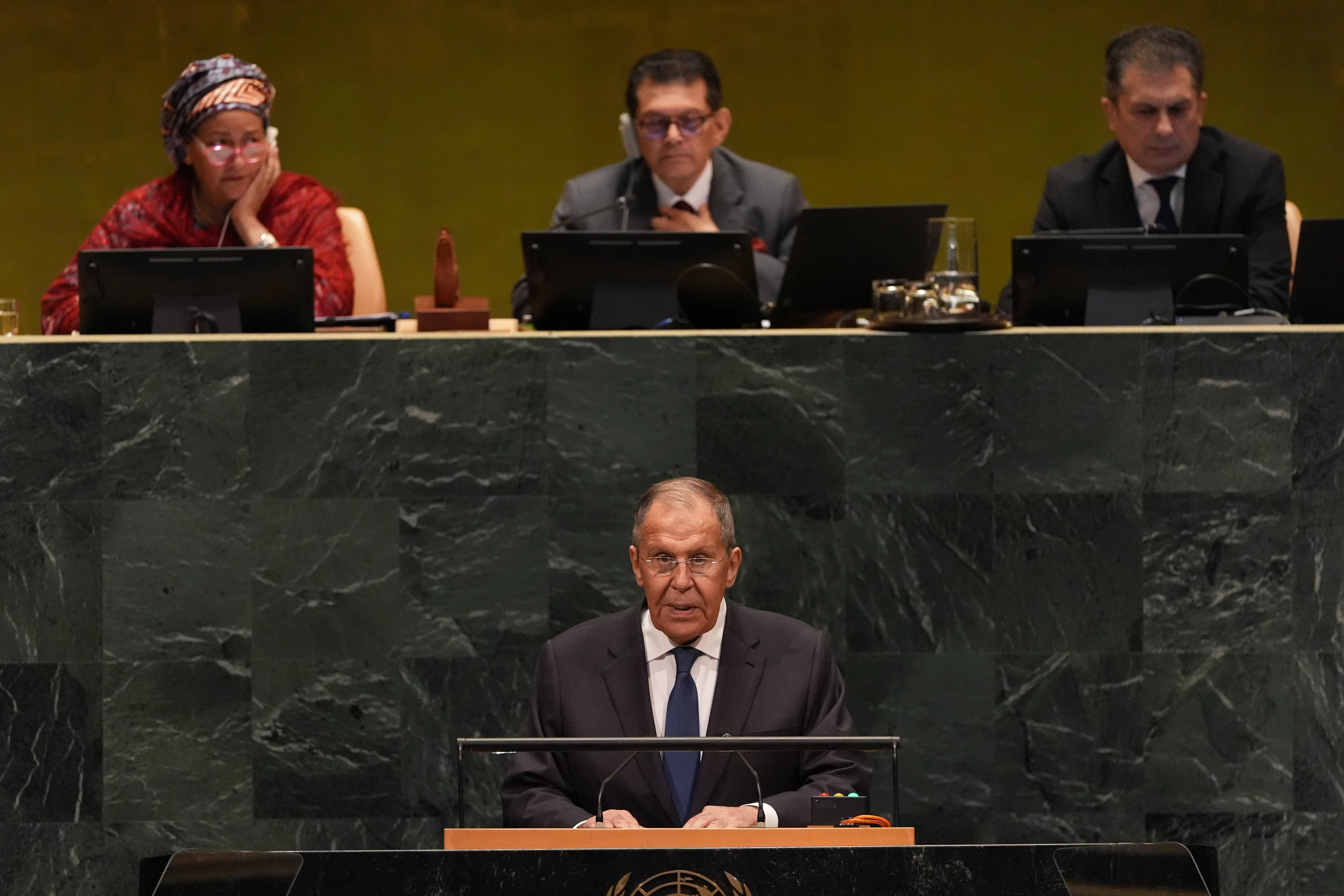
CAMEROON – The German and Russian foreign ministers met Saturday on the sidelines of the U.N. General Assembly, holding what's believed to be the first such tête-à-tête since Russia’s full-scale invasion of Ukraine in 2022. The meeting came as tensions between the European Union and Russia rose — and just before Russian Foreign Minister Sergey Lavrov addressed world leaders.
In the encounter, German Foreign Minster Johann Wadephul called on Russia to abandon its “dangerous path of escalation” toward Germany, Europe and the NATO alliance, a German delegation official said. Ties between Russia and Germany have soured in recent weeks, following an attempted drone attack last month at Leipzig airport — Germany has blamed the incident on Russia — and tit-for-tat responses that followed it.
Recommended Videos
Wadephul expressed openness to a better relationship but said it required a genuine willingness from Russia’s leadership to end the war in Ukraine, according to the official.
The German news agency dpa reported that the roughly 20-minute meeting took place in a room provided by the Russian side and ended with both ministers shaking hands.
Later, Lavrov said at a news conference that “nothing new came from” the conversation.
Then, Lavrov denounced the West in his speech
After the meeting, Lavrov went on to take the rostrum at the General Assembly, where he defended his country’s war in Ukraine and lobbed barbs at the West — including Germany. He made a point of blasting the notion of Germany or Japan gaining a permanent seat on the powerful U.N. Security Council. The United States has long supported permanent seats for those countries and India.
Criticizing NATO and the U.S. — though not President Donald Trump by name — Lavrov complained that the West “continues to try to maintain its privileges and to impose its own rules on everyone else” even as the geopolitical ground is shifting.
“A fairer, multipolar world order is emerging before our very eyes,” said Lavrov, whose country is part of the BRICS group of leading developing nations and other organizations that he portrays as more forward-looking and constructive.
Moscow has repeatedly sought to stress that it maintains a strong position on the global stage despite its 4½-year war on Ukraine and isolation from the West.
Writing on her personal Telegram channel, Maria Zakharova, a spokesperson for Russia’s Foreign Ministry, said that “tens of diplomats” had come to meet Lavrov to “shake his hand and thank Russia.”
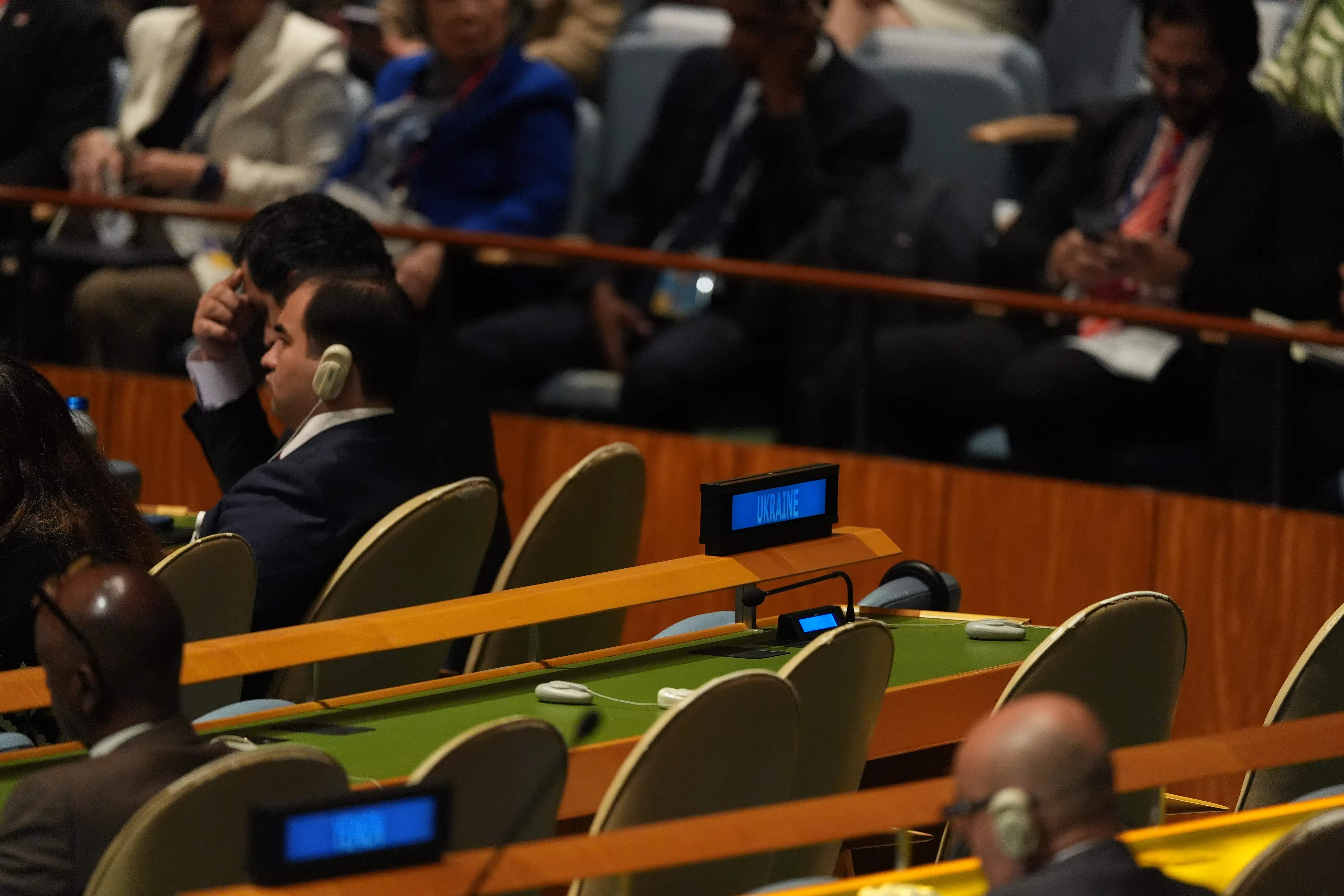
An overwhelming majority of General Assembly member nations have repeatedly condemned Russia's invasion of Ukraine, as Wadephul noted in his own address to the assembly Saturday.
“Russia’s war targets the lives of millions of innocent people, the existence of the Ukrainian state and culture and the European peace order,” he said, urging Russia to negotiating toward ending the fighting.
Ukrainian President Volodymyr Zelenskyy had his turn at the assembly rostrum Wednesday, when he pressed other countries to keep choking Russia’s revenues and impede its war efforts, and he echoed that message on social media Saturday morning.
“It is essential that our partners not forget: Russia is escalating every single day,” he wrote, adding that “the world must choose stronger responses to keep the war from spreading further.”
The remarks came amid an intensifying aerial war. With front-line positions largely unchanged since last year, Russia has hammered Ukraine with cruise and ballistic missiles, powerful glide bombs and jet-powered drones in recent months, while Ukraine’s long-range drones have targeted Russian oil refineries and businesses.
Ukrainian officials said Russian attacks killed four people Saturday, as Russian authorities said a Ukrainian drone attack killed three.
Since Russia launched the war — which Moscow describes as a “special military operation” intended to ensure Russia’s security and the rights of Russian speakers — Western analysts have estimated that over 500,000 Russian troops have been killed and that Ukraine has recorded more than 500,000 military casualties, including up to 140,000 deaths. Neither country discloses its own casualty totals.
The backdrop is a wide impact on fuel, fertilizer and grain chipments
The war has had global repercussions for fuel, fertilizer and grain shipments — and for geopolitics, widening divisions between Russia and the West.
U.S. lawmakers passed a powerful sanctions bill aimed at Moscow last month. President Donald Trump signed the bill into law last week but hasn’t enacted the measures yet.
Now back in Ukraine, Zelenskyy told reporters in voice mail messages Friday that Washington is pushing for three-way, technical talks involving delegations — but not top leaders — from the U.S., Ukraine and Russia. He said Ukraine is waiting for the U.S. to propose a date.
Kremlin spokesperson Dmitry Peskov said Friday that Russian President Vladimir Putin and Trump, during a call earlier this month, discussed holding such a meeting in the near future, but there were no specific plans yet.
Speaking to reporters in St. Petersburg on Friday night, Putin decried recent Ukrainian attacks deep inside Russia and on Russian-held areas of Ukraine. He said “proposals to resume the talks are all on the table,” but Moscow “will think carefully about what we need to do.”
Representatives from the three countries held three rounds of three-way negotiations early this year but achieved no significant breakthroughs.
___
Keaten reported from Geneva. Katie Marie Davies contributed from Manchester, England.